
Things to do in L'Aquila
Explore top experiences
Top 10 attractions in L'Aquila


Colosseum
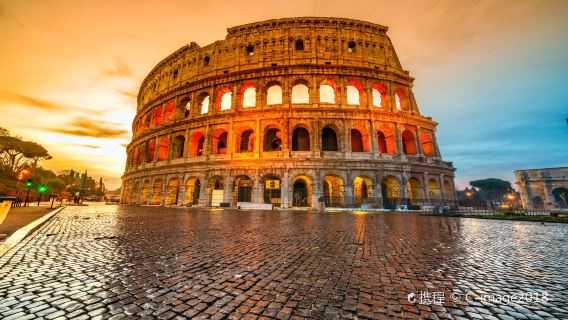
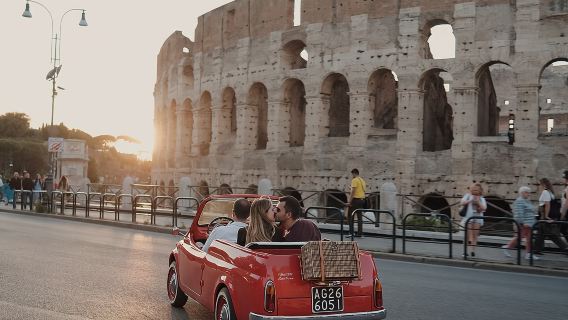
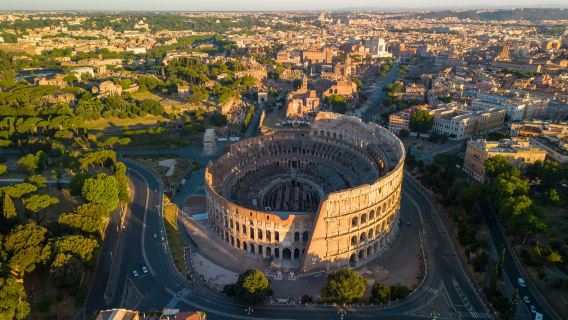
•This was the place where gladiators fought for their lives, prisoners on death row struggled with hungry lions, and it was also the great symbol of eternal Rome •Take in the magnificent architecture and imagine epic battles that once took place here •Imagine the bustle of the marketplace, the intrigue of political debates, and the opulence of imperial residences △ The Colosseum was built on the site of the magnificent Dumus Aurea and was completed in 80 AD. But with the decline of the Roman Empire in the 6th century AD, the Colosseum was gradually abandoned and became overgrown. Since then, the Colosseum has been damaged by earthquakes many times, and it has even become a source of stone and marble for builders. Nowadays, only the incomplete skeleton of the Colosseum is left in front of people, but you can still get a glimpse of the style of that day. △ From the outside, the Colosseum has four floors (including the underground). On the first floor, you can clearly see the maze-like building in the center of the Colosseum. The basements that were once the Colosseum housed the beasts and gladiators who were about to duel. If you want to see the underground part up close, you need to be led by a tour guide. △ The entire exterior wall of the Colosseum is made of limestone, with 80 arches (vormitori) on each floor, allowing spectators to quickly enter and take their seats. The recesses on the second and third floors were once filled with marble statues. The top of the wall is dotted with windows and slender Corinthian pilasters, and there are 240 wall columns to support the canvas canopy covering the Colosseum.Rome · 90.6 km from L'Aquila

Cathedral of Santa Maria del Fiore
• Known as the main church of the Catholic Archdiocese of Florence and the third largest church in the world • Consisting of the main church, bell tower and baptistery, it is not only large in scale, but also a representative building of the entire early Renaissance • The cathedral has a 19th-century Gothic Revival-style facade. Its exterior is paved with marble blocks of different shades of white, green and pink. The colors are colorful and harmonious △ In 1982, the cathedral was listed as a World Cultural Heritage as part of the historical center of Florence. After entering the church, you can climb up to the dome from the small door on the side. You need to climb 463 steps, and then overlook the entire city of Florence. △ The bell tower of the church is a Gothic building, 85 meters high. It consists of a six-story square structure stacked upward into a column. The outer wall is paved with white marble, which is pure and elegant, bringing more momentum to the majestic church.Italy · Florence

Piazza del Duomo
Piazza del Duomo is located in the heart of the historic center of Florence, which was inscribed on the UNESCO World Heritage List in 1982. The square has been the city's religious center since the Middle Ages. In the late 13th century, surrounding residential buildings were demolished to build the new cathedral and bell tower, and it was gradually expanded over the following centuries to its current size. The square brings together three iconic buildings: theCathedral of Santa Maria del Fiore, Giotto's Bell Tower, and The Baptistery of San Giovanni. Together, they form the "Cathedral of Santa Maria del Fiore complex," showcasing the evolution of architectural art in Florence from the Middle Ages to the Renaissance. The dome designed by Brunelleschi stands over 90 m high and is a striking visual focal point on the square's skyline. Historic buildings such as the Archbishop's Palace, the Cathedral Museum, and the Bigallo Museum are also located around the square. Standing in the center of the square and looking around, the facades of buildings from different eras and styles complement each other, making it a key location for experiencing the urban landscape of Florence.Italy · Florence

Villa Borghese
The garden was built for his family in the 17th century by Borghese, a confidential minister from a prestigious family in Siena, Tuscany. It has an extremely large area and is the second largest urban park in Rome. Among them are forests, ponds, two museums, an art gallery, zoo, horse riding stables, art academies in various countries, etc. This is a great place to go for a walk with the family or as a couple. From the end of April to May, when the trees begin to sprout, there is an elegant competition of horsemen in ancient costumes in Piazza Siena. The National Museum of Modern Art houses paintings from the 19th century onwards. There are not only works by Italian painters, but also many works by Klimuto, Monet, Amerikampop and others. The atrium here is very elegant.Rome · 89.6 km from L'Aquila

Piazza del Duomo
The Miracle Square is the top priority of visiting Pisa. The four major buildings on the square - the Cathedral of Pisa, the Baptistery, the Leaning Tower of Pisa and the cemetery are all artistic masterpieces in the history of architecture. The square was one of the centers of the essence of medieval art and had a profound influence on subsequent architectural design, and was inscribed on the UNESCO World Heritage List in 1987. The square takes its name from a description in a novel by the Italian writer and poet Gabriel D'Annunzio. The Pisa Cathedral in the center of the Pisa Cathedral Square was built in the 12th century AD and is a masterpiece of medieval Romanesque architecture. The mosaic decoration inside the church is mixed with Byzantine style, forming its unique "Pisa Romanesque style". Opposite the Baptistery of Pisa Cathedral is the Baptistery, which mixes Romanesque and Gothic styles. You can visit the middle of the Baptistery along the spiral staircase inside the Baptistery. The cylindrical structure, double dome and white marble make the interior of the baptistery even more beautiful. Leaning Tower of Pisa Behind the Leaning Tower of Pisa is the well-known Leaning Tower of Pisa, which itself is the bell tower of the cathedral. In the early stage of construction, the leaning tower tilted an average of 1 mm per year, and the work was stopped for a while, and the repair work has continued to this day. The rectangular building next to the Pisa Cemetery Church is the Pisa Cemetery. The tombstones, sculptures and frescoes on the cloister are also worth seeing. In addition, there is a tourist rest area on the large lawn of Miracle Square, where you can take various photos with the Leaning Tower of Pisa, buy souvenirs and snacks.Italy · Pisa

Piazza della Signoria
Piazza della Signoria is the political heart of Florence and an open-air sculpture gallery. The square is "L"-shaped, with the jagged tower of the Palazzo Vecchio serving as its constant visual focal point. It is surrounded by Renaissance buildings such as the Loggia dei Lanzi and the Uffizi Gallery, while the Cathedral of Santa Maria del Fiore is just a short walk away through the alleys. The sculptures displayed in the square are a veritable open-air history of Renaissance sculpture. A replica of Michelangelo's "David" stands at the entrance of the Palazzo Vecchio; the original was moved to the Gallery of the Academy of Florence in the 19th century. To the right of the square is the Fountain of Neptune created by Ammannati, featuring a white marble statue of Neptune standing on a chariot drawn by horses in the center, surrounded by bronze mythical creatures. On the north side of the square stands the bronze equestrian statue of Cosimo I de' Medici by Giambologna. Walking through the square at dusk, you can often encounter street performers playing music, with the sounds echoing among the ancient buildings. From the time of the Republic of Florence to the present, this square has been a gathering place for citizens and tourists alike, where centuries of power shifts and artistic heritage intertwine.Italy · Florence

Mouth of Truth
Mouth of Truth is a marble disc carved with a human face, embedded in the wall of the portico of the Basilica of Saint Mary in Cosmedin in Rome. It is widely known for its classic scene in the movie "Roman Holiday". This stone disc weighs over a thousand kg, and its eyes, nostrils, and mouth are all hollowed out. Its original purpose remains a subject of debate. Some scholars speculate that it may have been a drain cover or manhole cover from the ancient Roman period, while others suggest it was a component of a fountain or wellhead. The disc was placed in its current location in the church portico in 1632. Since the Middle Ages, there has been a popular legend about the Mouth of Truth: if a liar puts their hand into the disc's open mouth, it will be bitten off. The church also houses the skull of Saint Valentine, adding a layer of romantic meaning to this legend. Today, tourists come from far and wide, lining up to put their hands into the disc's mouth for photos. Not far in front of the church stands the ruins of the Temple of Portunus, which, together with the church, forms the ancient view of this area.Rome · 91.5 km from L'Aquila

Capri
Capri is located near the southern entrance of the Bay of Naples, facing the Sorrento Peninsula across the sea. The island is divided into two areas: Capri in the east and Anacapri in the west, featuring many white stone houses, winding pedestrian streets, and viewing platforms. Capri's Piazza Unberto I is the main hub of activity, with a concentration of cafes and shops nearby. Natural attractions include theBlue Grotto, Mount Solaro, and the Faraglioni rock formations, which can be explored by boat, cable car, or on foot. The island has a mild climate and lush vegetation, making it perfect for taking in the view, walking, and relaxing on vacation.Italy · Anacapri

Val d'Orcia
Val d'Orcia is named after the Orcia River and was inscribed on the UNESCO World Heritage List in 2004. This vast rural area is famous for its rolling hills, rows of cypress trees, vineyards, and olive groves, serving as a quintessential representation of the Tuscan landscape. UNESCO recognizes it as an exceptional example of the redesign of the natural landscape during the Renaissance, where the layout of farmland, the distribution of settlements, and the natural environment formed a harmonious and unique order. The valley unfolds along the ancient pilgrimage route, the Via Francigena, connecting medieval towns such as Montalcino, Pienza, San Quirico d'Orcia, and Castiglione d'Orcia. Cypress-lined paths, solitary farmhouses on hills, and the gully landscapes formed by wind and rain erosion on clay hills are all highly recognizable images of Val d'Orcia. The valley also produces Brunello wine and Pienza pecorino cheese, making it a pleasant destination for sightseeing.Italy · Pienza

Arch of Constantine
Arch of Constantine was built in 315 AD by the Roman Senate to commemorate Emperor Constantine the Great's victory over Emperor Maxentius at the Battle of the Milvian Bridge in 312. It is located right next to theColosseum, was once the route that triumphal processions had to take to enter the city, and is one of three surviving triumphal arches from the ancient Roman period. The other two—the Arch of Titus and the Septimius Severus Arch—are located in the Roman Forum. This arch features three archways and is clad in marble. A major feature of its decoration is the extensive use of components taken from earlier imperial monuments: the eight relief panels at the top come from the monument to Emperor Marcus Aurelius and depict scenes such as the emperor departing for war, presenting captives, and distributing largesse to the people; the statues of Dacians on the columns were taken from Trajan's Forum; and the circular reliefs above the two smaller side arches date back to the Hadrianic era, depicting hunting and sacrificial scenes. Only the horizontal frieze above the arches was newly created during the Constantinian period, depicting his complete military campaign from departure to his entry into the city and distribution of largesse to the people. Sculptures from different periods and styles are brought together on the same structure, creating a striking stylistic contrast.Rome · 90.7 km from L'Aquila
Experiences you can't miss in L'Aquila
Featured Cultural experiences in L'Aquila
View all Cultural experiences
Free cancellation
Book now for today
20% off
Limited-time sale
From€6.39€7.99
![Rome Vatican Travel Pass [Instant Ticket Issuance/Includes Vatican Museums, Colosseum & Other Popular Attractions/Includes Public Transportation]](https://ak-d.tripcdn.com/images//0586s12000n33lbwv51A3_C_568_320.jpg?_fr=wc)
3.9/5
· 9 reviews· 375 booked189 travellers saved
From€139.00
4.3/5
· 3 reviews· 158 bookedFree cancellation
Book now for today
From€12.00
143 booked
Free cancellation
Book now for tomorrow
From€35.00
59 booked
Free cancellation
Book now for tomorrow
From€17.50

4.3/5
· 4 reviews· 57 bookedBook now for today
96 travellers saved
From€89.00

53 booked
Book now for today
From€32.00
Featured Day tours in L'Aquila
View all Day tours
5.0/5
· 108 reviewsFree cancellation
Book now for today
100 consecutive positive reviews
5% off
Limited-time sale
From€42.75€45
4.9/5
· 3k reviews· 148 bookedFree cancellation
Book now for today
97% of travelers recommend
From€101.72
4.8/5
· 6 reviews· 122 bookedFree cancellation
60 travellers saved
From€87.78
![1-day tour to the Colosseum [guide service + multilingual guide]](https://ak-d.tripcdn.com/images/0355t12000sg06ah8C65A_C_568_320.png?_fr=wc)
![2-hour guided tour of Borghese Gallery and Museum in Rome [skip-the-line admission/professional guide]](https://ak-d.tripcdn.com/images/0356b12000tljsrrnFBB4_C_568_320.jpg?_fr=wc)
74 booked
Free cancellation
From€189.00
Free cancellation
Book now for today
From€194.17
Featured Food & drink in L'Aquila
View all Food & drink
4.9/5
· 299 reviews· 35 bookedFree cancellation
Book now for today
100 consecutive positive reviews
5% off
Limited-time sale
From€48.45€51
4.9/5
· 805 reviewsFree cancellation
Book now for today
46 consecutive positive reviews
5% off
Limited-time sale
From€32.77€34.5

4.8/5
· 493 reviewsFree cancellation
Book now for today
94.1% of travelers recommend
From€51.37



5.0/5
· 25 reviewsFree cancellation
Book now for tomorrow
25 consecutive positive reviews
5% off
Limited-time sale
From€94.05€99

Featured Outdoor experiences in L'Aquila
View all Outdoor experiences
4.7/5
· 945 reviews· 22 bookedFree cancellation
Book now for tomorrow
92.9% of travelers recommend
5% off
Limited-time sale
From€65.55€69
3.0/5
· 2 reviews· 24 bookedFree cancellation
Book now for today
From€84.00
5.0/5
· 5 reviewsFree cancellation
Book now for tomorrow
5% off
Limited-time sale
From€32.77€34.5

4.8/5
· 129 reviewsFree cancellation
Book now for tomorrow
95.3% of travelers recommend
5% off
Limited-time sale
From€30.40€32

5% off
Limited-time sale
From€152.00€160

5% off
Limited-time sale
From€99.75€105
Free things to do in L'Aquila
Colosseum
Rome · 90.6 km from L'AquilaCathedral of Santa Maria del Fiore
Italy · FlorencePiazza del Duomo
Italy · FlorenceVilla Borghese
Rome · 89.6 km from L'AquilaPiazza del Duomo
Italy · PisaPiazza della Signoria
Italy · FlorenceMouth of Truth
Rome · 91.5 km from L'AquilaCapri
Italy · AnacapriVal d'Orcia
Italy · PienzaArch of Constantine
Rome · 90.7 km from L'Aquila
What travellers say about L'Aquila

Anonymous userOctober 13, 2026
4.0
This is 1 of the most famous landmarks. Definitely worth the visit. I went in April which is good time as it was not too busy and not too hot. Need to rebook to avoid long queues
Colosseum
Anonymous userSeptember 22, 2026
5.0
The queue was quite long, and you need to make sure you're in the correct line before you start queuing… Queues at tourist attractions in Europe often consist of several separate lines with unclear signage. I didn't choose to climb the bell tower or the dome, but the museum included in the ticket is worth a good look; personally, I felt the environment was quite nice.
Cathedral of Santa Maria del Fiore

Blessed by GodSeptember 28, 2022
5.0
such a lovely place, the duomo or cathedral is very big that I cannot take a picture of the whole cathedral. Even if I have seen it several times I always love to visit and see it again and again.
Piazza del Duomo

Hossain Hoq ProhorSeptember 15, 2026
5.0
Villa Borghese Gardens is one of the most beautiful and peaceful green spaces in Rome, offering a refreshing escape from the city’s busy streets. The expansive park is filled with lush trees, colorful flowers, elegant fountains, quiet pathways, and beautiful viewpoints. Walking through the gardens feels relaxing, with plenty of scenic spots to stop, take photographs, or simply enjoy nature. The park also offers wonderful views toward Rome, making it especially enjoyable around sunset. Visitors can explore its charming corners, admire historic architecture, and spend a peaceful afternoon surrounded by greenery. Villa Borghese is a perfect destination for nature lovers, photographers, couples, and travelers looking for a relaxing experience in Rome.
Villa Borghese

SHANE LIM MYJune 21, 2026
5.0
The place was extremely beautiful. This is the first time ever I travel to Europe so I love the whole experience. Surely recommend
Piazza del Duomo

Lavender and SunOctober 8, 2021
5.0
The cultural center of Europe, the birthplace of the European Renaissance, the birthplace of opera, and a world-famous cultural tourist destination. Built in 1345, the Ponte Vecchio is the oldest bridge in Florence. The Ponte Vecchio was formerly the corridor from the Uffizi Palace to the Pitti Palace across the river.
Piazza della Signoria

学校🏫June 3, 2025
5.0
## Mirror of Lies: Soul-Eating Ceremony of the Mouth of Truth
When you squeeze through the noisy crowd of the Cosmedin Church, you suddenly bump into the iron-blue stone face in the niche - the mask of the river god with slightly open fangs is covered with moss, and the eye sockets are covered with centuries of dust. This ancient Roman sewer manhole cover was transformed into a lie-eating beast because of "Roman Holiday". Don't be deceived by the laughter of tourists: the moment you put your hand into its mouth, you will fall into a soul trial spanning a thousand years.
**Roman humor under the myth of lie detection**. Please look closely at the stone surface when queuing: the craftsmen in the first century AD deliberately carved the sea god into a horrified expression, originally to deter floods. One night in the Middle Ages, a drunkard stuck his hand between the fangs and cried and confessed his guilt, and an absurd legend was born. Today, husbands pretend to be bitten and scream, and wives hold their mobile phones and laugh and bend over - when the jungle of selfie sticks submerges the stone statue, the Mouth of Truth has long become a stage prop for contemporary people to create sweet lies.
**The hidden line of truth between the stone pillars of the church**. Don't ignore the church behind because of the crowd! On the sixth-century mosaic altar, Christ is crushing the head of a snake (the incarnation of truth). Look up at the dome: St. Peter is the only one missing among the twelve apostles - it is said that the devil stole his statue during construction, but it fell into the Tiber River due to the burns of the church's holy light. When your fingertips brush over the cracks in the north wall (the signature of the 1348 earthquake), you suddenly see the afterimage of the saint in the red light of the stained glass window: it turns out that truth never lives in the fangs of stone statues, but flows in the scars of time that have crushed the building.
**The Liar's Monologue in the Moonlight**. After closing, go around to the small garden on the east side of the church, and the Mouth of Truth turns back into a gloomy monster behind the fence. Put your palms against the iron bars and look at the stone statue, and the roar of the ancient Roman aqueduct floats in the wind. One night in the third century AD, pagans carved anti-Christian slogans on this stone, and the priests used holy water to wash the fangs that appeared. At this moment, the cool air seeps out of the cracks in the stone and wraps around my wrist, as if two thousand years of lies and confessions have condensed into salt here - what we fear is never the bite of the stone, but the piercing of the shadow in our hearts.
Please take out the coins and put them in the donation box before leaving. When the crisp sound of metal hitting the bottom of the box echoes through the empty courtyard, it is like the trembling sound of the soul's balance returning to zero. As the candlelight flickers in the altar, you suddenly realize: the most terrifying thing about this stone statue is not the fangs but the hollow throat - there are countless untold truths deposited there, like the silent ancient pottery fragments at the bottom of the Tiber River. And the 14th-century crucifix forgotten by tourists in the corner of the church, wild violets are blooming between the ribs of the wooden sculpture of Christ, mocking the human obsessive pursuit of "absolute truth" with gentle vitality.
Mouth of Truth

Yeva_shineAugust 10, 2024
5.0
peaceful and calm island. and very expensive, just keep it in mind when you planning to visit if you not limited in budget stay here for two nights and enjoy amazing food and ambiance. Everything is very close, you have so many chances to meet celebrities, politicians in cafes or restaurants.but if you are not ready to pay 2000€ for one night in hotel, you could visit the island just with day trip by boat
Capri

TodemmyOctober 29, 2019
5.0
Orcia is located in the province of Siena in the Tuscany region of central Italy. Since the Middle Ages, this border region of Orcia has always been a must-go place for pilgrims on their way to Rome. There are countless hostels, hotels, hospitals and post stations in the valley. Over the centuries, it has received a large number of pilgrims and tourists, providing convenience for their travel.
Val d'Orcia

MARK MORDOVTSEVMay 23, 2026
5.0
I would describe the Arch of Constantine as one of those places in Rome that you almost underestimate until you stand right in front of it. It is not just an arch, but a powerful visual connection between ancient history and the modern flow of tourists moving toward the Colosseum. What impressed me most was how naturally it fits into the landscape, as if it has always been part of the city’s rhythm.Business Hours:Open 24 hours (outdoor public monument, accessible at any time)Address:Via di San Gregorio, 00186 Roma RM, Italy (next to the Colosseum)Tips:Visit early in the morning or near sunset to avoid heavy crowds and get better lighting. Don’t rush past it on the way to the Colosseum, take time to walk around and observe the detailed reliefs on all sides. For the best photo, step a little back toward the road to capture both the arch and the Colosseum in one frame.Reasons to Recommend:I would recommend it because it gives a real sense of ancient Rome in one view. The combination of scale, history, and location makes it more meaningful than it first appears, especially when you realize how closely it is tied to the Colosseum experience.
Arch of Constantine


