
Things to do in Qingxu
Explore top experiences
Top 10 attractions in Qingxu


Jinci Temple Museum
Jinci Temple is located on the banks of the Jin River at the foot of Xuanweng Mountain, 25 km southwest of Taiyuan. It was built by later generations to commemorate Tang Shuyu, the founding feudal lord of the Jin State, and served as the ancestral temple of the Jin State. It is often said that "a visit to Taiyuan is incomplete without seeingJinci Templethe saying "a wasted trip to Taiyuan". After getting off at Jinci Temple, the first place you'll reach isJinci MuseumThis is a free park with a pleasant environment, perfect for casual strolling. After about a 10-minute walk through the park, you'll reach the main area of Jinci. Inside Jinci Museum,Jinci TempleThe "Three Treasures" (Xian Hall, Flying Bridge Across Fish Pond, and Shengmu Hall) and "Three Wonders" (Zhou-bai, Nanlao Spring Pavilion, and painted clay sculptures) are must-sees for every visitor toJinci Templeview that everyone must see. Jinci TempleThe "Three Treasures" are connected and located atJinci Templeon the central axis, allowing for a combined visit. Xian Hall is a place for offering sacrifices, with fence-like walls on all four sides, providing good ventilation and coolness. Notably, not a single iron nail was used in the beams and pillars throughout the hall. The Flying Bridge Across Fish Pond is located in front of Xian Hall and was built during the Song Dynasty. The entire view resembles a modern overpass, making it the only existing example among ancient bridges in China. One end of the "Flying Bridge" connects to Shengmu Hall, which is the earliest existing main building in Jinci Museum. The main hall is spacious, and a major highlight is its beam-and-pillar structure without internal columns. Eight wooden carved coiled dragons, appearing ready to fly, are carved on the eight corridor pillars in front of the hall, which, together with the "Flying Bridge Across Fish Pond," present a magnificent sight. Centered around the Hall of the Holy Mother, it's easy to find the "Three Wonders." The painted clay figurines are located inside the Hall of the Holy Mother, with the main statue of the Holy Mother seated majestically in a wooden shrine, dignified and resplendent, while the other 42 attendant statues stand on either side. These figurines are dressed in vibrant colors with varied expressions, including one maidservant dressed as a flower-dan (young female role in Chinese opera), her face half joyful and half sorrowful, evoking complex emotions in viewers. Master Mei Lanfang once stood before this maidservant statue for a long time, carefully studying her posture and inner emotions, and praised it highly. The Zhou Cypress, located north of the Hall of the Holy Mother, was planted during the Western Zhou Dynasty and is over 3,000 years old. The Pavilion of the Never-Aging Spring stands south of the Hall of the Holy Mother, where the source of the Jin River flows continuously year-round. In addition,Jinci TempleInside, there is also the extremely precious "Jinci Inscription" stele, personally composed and handwritten by Emperor Taizong of Tang, Li Shimin. At the southernmost part, you can find the Shifang Fengsheng Zen Temple, which is said to have originally been the villa of Yuchi Gong, a founding general of the Tang Dynasty. In the northern part of the temple complex, the Futu Courtyard houses the Sheli Shengsheng Pagoda. Climbing the pagoda offers a panoramic view.Jinci TempleThe panoramic view is clearly visible.Taiyuan · 13.4 km from Qingxu

Taiyuan Ancient County
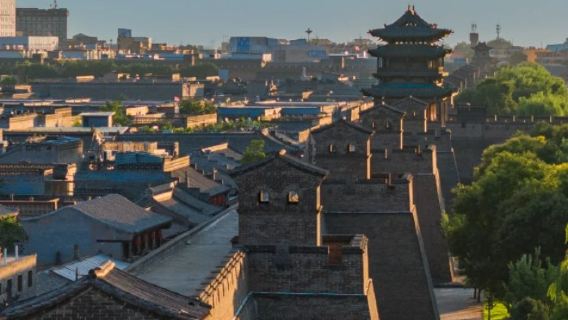
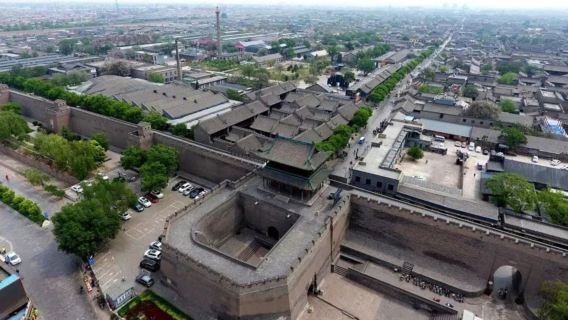
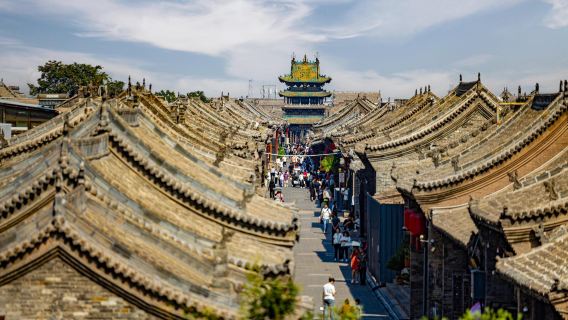
The ancient county seat of Taiyuan is located in Jinyuan District, covering an area of about 0.8 square kilometers. There are many relics of historical buildings in the city, the pattern of cross streets is clear, and the texture of streets and alleys is perfect. It follows the ancient architectural pattern of Jinyang ancient city "Phoenix Flying in the City", just like a phoenix with its head north and tail south. It has the reputation of "Phoenix City" since ancient times. It is the continuation of the 2500-year-old Jinyang ancient city. There are 79 existing cultural relics buildings in the city, and 49 historical buildings listed for protection by the Taiyuan Municipal Government. Among them, the Confucian Temple is listed as a national key cultural relics protection unit.Taiyuan · 17.4 km from Qingxu

Taiyuan Botanical Garden
Taiyuan Botanical Garden is located at the foot of Taishan Mountain in Jinyuan District and collects more than 3,000 species of plants. Visitors can stand on the cantilever at the main entrance and overlook the whole botanical garden.Taiyuan · 18.2 km from Qingxu

Jinci Tianlong Mountain Scenic Area
Jinci TempleJinci Temple is located on the banks of the Jin River at the foot of Xuanweng Mountain, 25 km southwest of Taiyuan. It was built by later generations to commemorate Tang Shuyu, the founding feudal lord of the Jin State, and served as the ancestral temple of the Jin State. It is often said that "a visit to Taiyuan is incomplete without seeingJinci Templethe saying "a wasted trip to Taiyuan". inJinci TempleAfter getting off, the first place you'll reach isJinci ParkThis is a free park with a pleasant environment, perfect for a casual stroll. It takes about 10 minutes to walk through the park to reach your destination.Jinci TempleMain scenic area. Within the attraction,Jinci TempleThe "Three Treasures" (Xian Hall, Flying Bridge Across Fish Pond, and Shengmu Hall) and "Three Wonders" (Zhou-bai, Nanlao Spring Pavilion, and painted clay sculptures) are must-sees for every visitor toJinci TempleView that everyone must see. The Tianlong Mountain Grottoes are located 40 km southwest of Taiyuan.TianlongshanWaist.TianlongshanOriginally named Fang Mountain, it came to be called Tianlong Mountain after the Tianlong Temple was built at its base during the Northern Qi Dynasty.TianlongshanThis was once the summer palace of Gao Huan, father of Emperor Gao Yang of the Northern Qi Dynasty. Jinci Tianlong Mountain Scenic Area boasts picturesque landscapes with rolling hills covered in lush pine and cypress trees. The Dragon King Stone Cave on the mountain top features rippling spring water, while crystal-clear streams flow through the valleys below. The Tianlong Mountain Grottoes, carved into the cliffs of the eastern and western peaks, include 24 caves dating back to the Eastern Wei, Northern Qi, Sui, and Tang dynasties - with 8 caves on the eastern peak, 13 on the western peak, and 3 on the northern side. These grottoes preserve over 1,500 Buddhist statues and 1,144 relief carvings, ceiling decorations, and murals. The Tianlong Mountain Grottoes are renowned for their mature, full-bodied, and refined craftsmanship, as well as their delicate emotional expression. They stand out for their strong national and regional characteristics, close connection to the lives of working people, and are celebrated for being "small yet exquisite."Taiyuan · 13.3 km from Qingxu

Jinci Scenic
Jinci Scenic is a comprehensive tourist attraction that blends history, culture, and natural beauty, located in Jinyuan District, Taiyuan City, Shanxi Province, at the source of the Jin River, originally namedJinci Templeis an outstanding representative of ancient Chinese garden architecture. Jinci Scenic is not only the earliest existing imperial sacrificial garden in China, but also tangible evidence of Jin culture's lineage tracing back to the Western Zhou Dynasty's establishment of the Tang State and Jin State, continuing through the cultural heritage of the Tang Dynasty's golden age. As a comprehensive embodiment of Shanxi's historical legacy, Jinci Scenic attracts numerous visitors with its exquisite architecture, rich cultural heritage, and beautiful natural surroundings. Jinci ScenicThe site boasts abundant cultural relics, featuring over 100 structures from the Song, Yuan, Ming, and Qing dynasties including halls, pavilions, towers, bridges, and terraces. Among these, the Xian Hall, Flying Bridge Across Fish Pond, and Shengmu Hall are revered as Jinci's "Three National Treasure Buildings," while Nanlao Spring, the colored sculptures of maidservants, and Zhou-bai cypress are celebrated as the "Three Wonders of Jinci." The Shengmu Hall is...Jinci ScenicOne of the core structures, renowned for its unique architecture and exquisite carvings. The hall enshrines a statue of Zhou Bai, surrounded by intricate murals and carvings that showcase the masterful craftsmanship of ancient art. The Flying Bridge over Fish Pond isJinci ScenicAnother iconic structure, the bridge is ingeniously designed to appear as if floating on water, showcasing the wisdom of ancient architects. Jinci Scenic is renowned not only for its architecture but also for its abundant natural views. The attraction boasts 96 ancient and famous trees, including 30 that are over a thousand years old. Towering ancient trees and murmuring springs create a tranquil natural environment. Visitors can stroll along shaded paths, admire the ever-changing seasonal beauty, and experience nature's harmony. Additionally, Jinci Scenic offers a variety of cultural experiences, such as traditional etiquette demonstrations and ancient music performances, allowing visitors to immerse themselves in the profound history and cultural charm during their visit. Whether you're a history enthusiast, cultural explorer, or a traveler seeking tranquility, Jinci Scenic provides a peaceful retreat for every visitor.Taiyuan · 13.4 km from Qingxu

Tianlongshan Caves
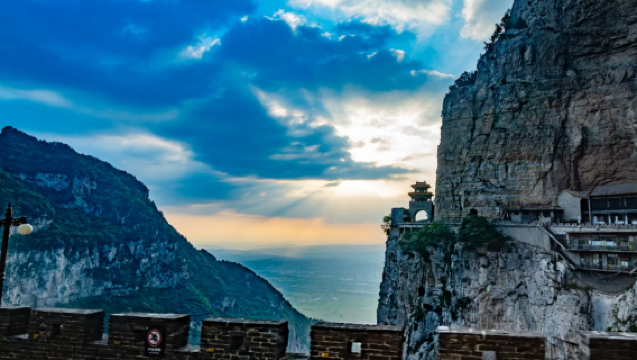
The Tianlong Mountain Grottoes are located on the mountainside of Tianlong Mountain, 40 kilometers southwest of Taiyuan City. Tianlong Mountain was formerly known as Fangshan Mountain. After the Tianlong Temple was built at the foot of the mountain in the Northern Qi Dynasty, the mountain was called Tianlong Mountain. It used to be the summer palace of Gao Huan, the father of the Northern Qi Emperor Gao Yang. Tianlong Mountain has beautiful scenery, surrounded by undulating mountains, lush pines and cypresses, rippling springs in Longwang Stone Cave on the top of the mountain, and clear streams in front of the mountain. The Tianlongshan Grottoes are distributed on the cliff waist of the east and west peaks of Tianlong Mountain. There are 24 caves excavated in the Eastern Wei, Northern Qi, Sui and Tang Dynasties, eight caves in the east peak, thirteen caves in the west peak, and three caves in the north of the mountain. There are more than 1,500 statues in the coexisting grottoes, and 1,144 relief sculptures, caisson wells and portraits. The Tianlongshan Grottoes are characterized by their mature, full, succinct and meticulous expression of emotions, which are close to the life of laborers.Taiyuan · 14.6 km from Qingxu

The Qiao's Family Compound
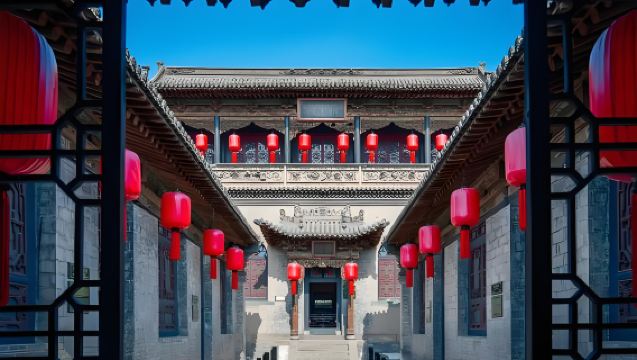
The Qiao's Family Compound is located in the center of Qiaojiapu village, Qi county, also known as "The Qiao Family CourtyardIt was the residence of Qiao Zhiyong, a renowned commercial and financial capitalist in the Qing Dynasty, and has served as a filming location for over 30 movies and TV series, including "The Qiao Family Courtyard" and "Raise the Red Lantern." If you've seen these films, you'll surely recognize the scenes here: rows of red lanterns hanging high, towering brick walls, exquisite carvings, beautiful bracket sets and upturned eaves, and deep alleys. This is the famous The Qiao Family Courtyard. This is a residential complex from the Ming and Qing dynasties, its architecture resembling a castle, imposing and grand, typical of the living style of a large northern family during the Ming and Qing periods. Viewed from above, the entire courtyard layout resembles the Chinese character "囍" (double happiness), symbolizing good fortune. The complex is meticulously laid out yet also varied; even the more than 140 chimneys on the rooftops are unique. It is said to have been built by the imperial family.The Forbidden CityThere's a saying that "for residential architecture, visit the Qiao family courtyard". Upon entering the Qiao family courtyard, a straight stone-paved path approx. 80 m long divides the six courtyards into two rows, north and south. According to traditional naming, the three courtyards on the north side of the Qiao family courtyard are called the old courtyard, northwest courtyard, and study courtyard from east to west. The three courtyards on the south side are called the southeast courtyard, southwest courtyard, and new courtyard, reflecting the construction sequence of each courtyard. The brick carvings, painted decorations, and inscribed plaques in each courtyard are exquisitely crafted. The standout is the "hundred longevity characters" screen wall at the main entrance, featuring 100 uniquely styled seal-script "longevity" characters, where art and culture blend seamlessly. The brick carvings at the land god shrine are also noteworthy. Under the eaves of every room in the Qiao family courtyard, you'll find genuine gold-painted decorations, notably created using the raised paste technique with meticulous layering and final gold application. Among the many inscribed plaques at the Qiao family courtyard, the one personally calligraphed by Fu Shan in the fourth courtyard is particularly remarkable.Danfeng pavilion“Plaque”, when visiting here, be sure to learn about the story behind this plaque. Additionally, there are three treasures in the Qiao Family Courtyard: the ten-thousand-people ball, the rhinoceros gazing at the moon mirror, and the nine-dragon lantern. The rhinoceros gazing at the moon mirror was the treasure that brought wealth to the Qiao family, while the nine-dragon lantern was a gift from Empress Dowager Cixi, located in the courtyard at the southern center. Today, the Qiao family courtyard also serves as a folk museum, with its six courtyards respectively displaying agricultural life through the seasons, life rituals, inner gardens, commercial customs, luxurious furnishings, and the history of the Qiao family. Visitors can explore while learning about the Qiao family's philosophy of life, household management, and business.Qi County · 23.6 km from Qingxu

Mengshan Grand Buddha
The Mengshan Giant Buddha is also known as the Giant Buddha of the Western Mountains. It was built in the Northern Qi Dynasty during the reign of the Tianbao Emperor, making for over a thousand years of history. The Mengshan Giant Buddha was originally carved into the cliff face to the rear of Mengshan's Kaihua Temple. During the later years of the Yuan Dynasty, the Mengshan Giant Buddha was damaged. It was rediscovered in 1980 but, at the time, the head of the Buddha was missing. A new head has since been carved for the giant Buddha. The Mengshan Buddha is incredibly majestic. From the bottom of his legs to his neck is about 30 meters. Based on the proportions of the human body, it is assumed that the original statue (including the missing head) would have been 46 meters tall.Taiyuan · 20.9 km from Qingxu

Jinyang Ancient City Relic Site
Jinyang Ancient City Relic Siteis the former site of Jinyang City from the Spring and Autumn period to the Five Dynasties period, located in the Jinyuan area southwest of Taiyuan. The ancient city was first built in the late Spring and Autumn period (497 BC). Legend has it that it was constructed under the direction of Dong Anyu, a retainer of Zhao Jianzi, the chief minister of the State of Jin. Over the following 1,500 years, it spanned the Qin, Han, Wei, Jin, Northern and Southern Dynasties, Sui, Tang, and Five Dynasties periods. It served successively as the initial capital of the State of Zhao, the secondary capital of Northern Qi, and the northern capital of the Tang Dynasty, serving as a major military and political hub in the north for a long time. Events that influenced the course of history, such as the Battle of Jinyang in the late Spring and Autumn period, the subsequent "Partition of Jin," and Li Yuan's uprising in Jinyang at the end of the Sui Dynasty, all took place here. The Later Tang, Later Jin, Later Han, and Northern Han dynasties also successively established their capitals here. Taiyuan's reputation as the "Dragon City" stems from this history. In the fourth year of the Taiping Xingguo era of the Northern Song Dynasty (979), Emperor Taizong of Song, Zhao Guangyi, ordered the city to be burned and diverted the Fen and Jin rivers to flood the ruins, causing the ancient city to be buried underground from then on. Jinyang Ancient City Relic Siteconsists of city ruins, religious sacrificial sites, and ancient tomb areas, covering an area of approx. 20 square kilometers. Most of the city remains buried under farmland and villages today, with rammed earth ruins such as the remnants of the west city wall and the southwest corner visible above ground. Today's archaeological site park focuses on the display of archaeological sites: Building Foundation No. 2 presents a temple site from the Tang and Five Dynasties periods, while Site No. 4 displays a metal workshop and the inner city water storage system from the mid-Tang Dynasty. A Jinyang Ancient City Archaeological Museum is embedded in the adjacent Ming Dynasty Taiyuan Ancient County City wall, and unearthed artifacts, such as a broken stele inscribed with the words "Jinyang Palace of the Sui Dynasty," are on display inside.Taiyuan · 18.5 km from Qingxu

The Saint Mother's Hall
The Saint Mother's Hall is the main hall of the Jinci Temple Museum. Together with the Flying Bridge Over Fish Pond and the Xian Hall, it is known as one of the three treasures ofJinci. It was built to honor Yi Jiang, the queen of King Wu of Zhou, who was also the daughter of Jiang Ziya and the mother of King Cheng of Zhou. The hall was first built during the Tiansheng era of the Northern Song Dynasty, nearly 1,000 years ago. Although it has been renovated by later generations, it largely retains the original appearance of a Song Dynasty hall. Walking west along the central axis of the Jinci Temple Museum and crossing the Flying Bridge Over Fish Pond, you are greeted by this hall with its double-eaved hip-and-gable roof. It has a nearly square floor plan, is seven bays wide and six bays deep, and stands nearly 20 m high with deep, overhanging eaves. Standing in front of the hall and looking up, its presence is expansive and steady. Beyond the exterior architecture, the interior is also worth seeing. Each of the eight columns in the front corridor features a Northern Song Dynasty wood-carved dragon. The dragon bodies were carved separately from the columns and then joined using mortise-and-tenon joints; such Song Dynasty dragon columns are rare. The hall is surrounded by a corridor, and the front corridor is two bays deep, meaning the weight of the roof is largely distributed between the corridor columns and the eaves columns, leaving very few columns inside the hall. The colored sculptures inside are the core highlight: among the more than 40 statues, the Saint Mother Yi Jiang sits in the shrine wearing a phoenix crown and python robe, while the attendants are lined up on both sides, each holding different offerings with distinct identities and expressions. They are treasures of Song Dynasty colored sculpture, and the Song Dynasty attendant statues are thus known, along with the Zhou Cypress andNanlao Spring, as the three wonders ofJinci. Beside the hall stands the Zhou Cypress, said to have been planted in the Western Zhou Dynasty, with a trunk that leans like a reclining dragon.Taiyuan · 13.5 km from Qingxu
Experiences you can't miss in Qingxu
Featured Cultural experiences in Qingxu
View all Cultural experiences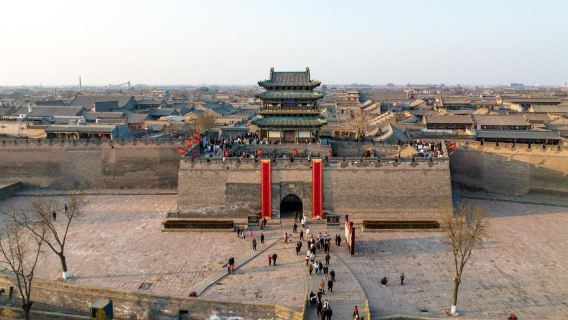
Free cancellation
Instant confirmation
Book now for tomorrow
FromUS$40.77
Free cancellation
Instant confirmation
Book now for tomorrow
FromUS$16.45
FromUS$16.45
5.0/5
· 1 reviewFree cancellation
Book now for tomorrow
FromUS$5.98
Free cancellation
Book now for today
FromUS$40.21
Free cancellation
Instant confirmation
Book now for tomorrow
FromUS$76.39
Free cancellation
Book now for tomorrow
FromUS$16.45

Featured Day tours in Qingxu
View all Day tours
Free cancellation
Instant confirmation
Book now for tomorrow
Save US$0.55
FromUS$54.15US$54.7
Free cancellation
Instant confirmation
Book now for tomorrow
Save US$0.55
FromUS$54.15US$54.7
5.0/5
· 1 reviewFree cancellation
Instant confirmation
Book now for tomorrow
FromUS$69.82
Free cancellation
Instant confirmation
FromUS$152.87
Free cancellation
Instant confirmation
Book now for today
FromUS$135.89

FromUS$169.86
Free things to do in Qingxu
Jinci Temple Museum
Taiyuan · 13.4 km from QingxuBook now for tomorrow, Cancel anytimeTaiyuan Ancient County
Taiyuan · 17.4 km from QingxuTaiyuan Botanical Garden
Taiyuan · 18.2 km from QingxuBook now for tomorrow, Cancel anytimeJinci Tianlong Mountain Scenic Area
Taiyuan · 13.3 km from QingxuBook now for tomorrow, Cancel anytimeJinci Scenic
Taiyuan · 13.4 km from QingxuTianlongshan Caves
Taiyuan · 14.6 km from QingxuBook now for tomorrow, Cancel anytimeThe Qiao's Family Compound
Qi County · 23.6 km from QingxuBook now for tomorrow, Cancel anytimeMengshan Grand Buddha
Taiyuan · 20.9 km from QingxuBook now for tomorrow, Cancel anytimeJinyang Ancient City Relic Site
Taiyuan · 18.5 km from QingxuThe Saint Mother's Hall
Taiyuan · 13.5 km from Qingxu
What travellers say about Qingxu

M39***94October 18, 2026
5.0
If I were to recommend the only must-see attraction in all of Shanxi, Jinci Temple would be my top choice. Its beautiful environment and rich cultural heritage make it a vivid representation of history. The ancient trees, palaces, and buildings are truly awe-inspiring, offering a sense of cleansing and rejuvenation.
Jinci Temple Museum

楚云霁月August 21, 2026
4.0
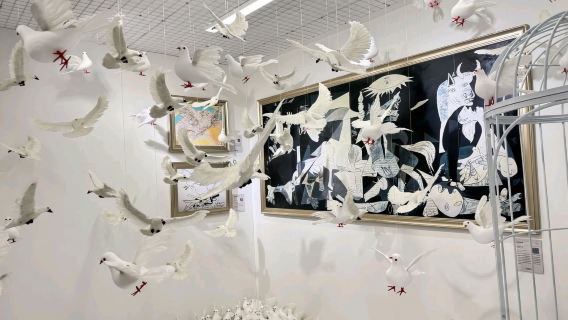
The old town was rather deserted. The art exhibition was quite nice, though a bit over the top. But the park at the exit was absolutely gorgeous. Winding paths led to secluded spots, and unexpected beauty unfolded.
Taiyuan Ancient County
139***60October 15, 2026
5.0
Upon entering the ticket hall of Taiyuan Botanical Garden, you'll see lizards, snakes, groundhogs, and other small animals—quite captivating. After passing through the ticket gates and entering the park, you'll find the popular escalator. Taking the escalator up offers stunning views of the surrounding scenery. The three large plant greenhouses each have their own unique features. Overall, a thorough visit is well worth the ticket price.
Taiyuan Botanical Garden
M23***53May 7, 2026
5.0
This was my first time visiting Tianlong Mountain Scenic Area. From Taiyuan Railway Station, I took bus 308 to the last stop, then walked for less than ten minutes to reach Tourist Bus 1 (4 yuan). I got off at Longmen Station and walked down the mountain. The visit took about three and a half hours. I saw Bailong Cave and wasn't tired at all. I took a bus down the mountain from the National Treasure Hall. I passed the popular "Instagrammable" bridge twice, and it was beautiful.
Jinci Tianlong Mountain Scenic Area

弃鄂从汕February 28, 2026
5.0
I learned about Jinci Temple in junior high and high school Chinese classes, and 30 years later I finally got to visit it. I should have taken my time and spent the whole day exploring it, but unfortunately I only had half a day, and I had to rush to Pingyao the next morning.
Jinci Scenic

M51***71June 20, 2026
5.0
The scenery is absolutely stunning. And transportation is incredibly convenient. After taking bus 804 or 856 to the last stop, it's less than a ten-minute walk to the bus stop for the Tianlongshan Grottoes (Sightseeing Route 1), which costs four yuan one way and can be paid with NFC. Seeing such a beautiful sky from the popular bridge was truly breathtaking.
Tianlongshan Caves

M38***49October 17, 2026
5.0
The Qiao Family Compound is the former residence of Qiao Zhiyong, a famous Shanxi merchant during the Qing Dynasty. It is hailed as "a shining pearl in the history of northern folk architecture" and is often referred to as "the Forbidden City for the imperial family, and the Qiao Family Compound for folk residences." Built during the Qianlong era, the courtyard with its blue bricks and gray tiles exudes a truly dignified and imposing atmosphere, with every brick and tile reflecting the confidence of the Shanxi merchants over the past century.
The Qiao's Family Compound

davidsnowOctober 8, 2026
5.0
Breathtaking view, amazing hike to the top, unreal experience and genuine atmosphere. Highly recommend
Mengshan Grand Buddha

c99cSeptember 16, 2025
5.0
The ancient city of Jinyang, founded in the mid-to-late Spring and Autumn Period (497 BC), served as the capital of the State of Zhao during the Warring States Period, a secondary capital during the Northern Qi Dynasty, the capital of the Northern Han Dynasty during the Five Dynasties and Ten Kingdoms Period, and finally, Beijing during the Tang Dynasty. Jinyang witnessed the division of Jin by three states, the border defense of the Western Han Dynasty, the hegemony of the Eastern Wei Dynasty, the secondary capital of the Northern Qi Dynasty, the founding of the prosperous Tang Dynasty, and the wars of the Five Dynasties. A series of major historical events were closely linked to the ancient city of Jinyang. In the fourth year of the Taiping Xingguo reign of the Song Dynasty (979), the Song Dynasty destroyed the Northern Han Dynasty and burned Jinyang to the ground. The Fen River was then diverted to flood the city, razing the ancient city to the ground.
Currently, the ruins of the temple and the canal are available at the site, but the core ruins of the Jinyang Palace have yet to be found.
Admission is free, and parking is convenient.
Jinyang Ancient City Relic Site

从来都没有神November 3, 2024
5.0
The Our Lady Hall of Jin Temple is the main hall of Jin Temple in Taiyuan, Shanxi Province, and is also one of the three national treasures of Jin Temple. It was built during the Tiansheng period of the Northern Song Dynasty, facing west to east, and located at the end of the central axis. The architectural style of the Our Lady Hall is unique and has high historical, artistic and scientific value.
The main features of the Our Lady Hall include:
1. **Large-scale building**: The hall is 31 meters long and 25 meters wide, with a double-eaved hip roof, a total height of 19 meters, a width of seven rooms, a depth of six rooms, and a plane that is approximately square.
2. **Exquisite architectural structure**: There are corridors around the main hall, and the front corridor is two rooms deep, which is very spacious. This "sub-step surrounding" architectural form is a unique example among the existing ancient buildings in China.
3. **Exquisite decorative art**: A large number of Song Dynasty colored sculptures are preserved in the Our Lady Hall. These colored sculptures are vividly shaped and exquisitely crafted, and are treasures of ancient Chinese sculpture art.
4. **High historical and cultural value**: The Our Lady Hall was built to worship Yi Jiang, the daughter of Jiang Ziya, the wife of King Wu of Zhou, and the mother of King Cheng of Zhou, and has important historical and cultural value.
In general, the Notre Dame Hall of Jinci is one of the outstanding representatives of ancient Chinese architecture. It not only demonstrates the superb skills of ancient Chinese architecture, but also reflects the profound heritage of ancient Chinese culture. If you are interested in ancient Chinese architecture and historical culture, the Notre Dame Hall of Jinci is definitely a place worth visiting.
The Saint Mother's Hall


