
Things to do in Vatican
Explore top experiences
Top 10 attractions in Vatican


Vatican Museums
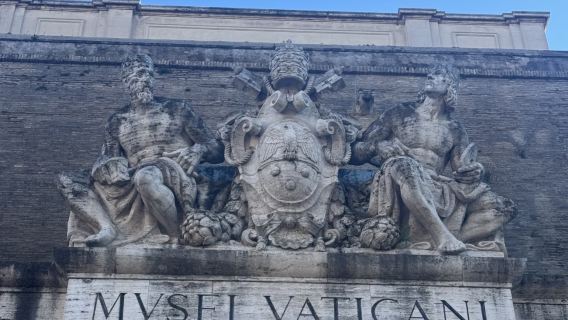
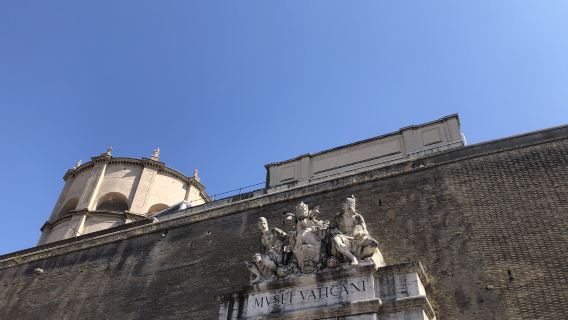
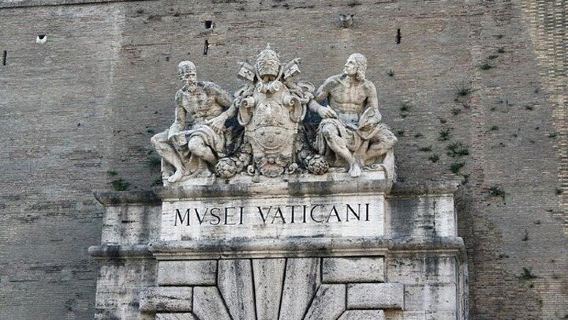
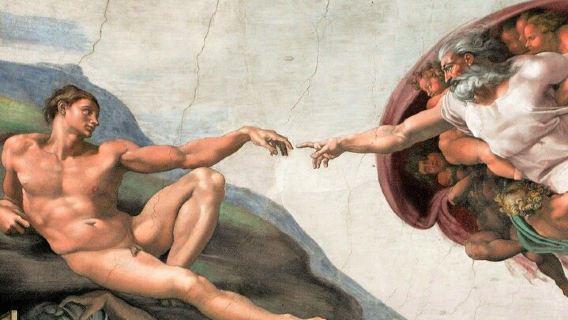
The Vatican Museum is one of the earliest museums in the world, consisting of 12 exhibition halls and 5 art galleries, bringing together ancient artifacts from Egypt, Greece, and Rome, as well as the artistic essence of the Renaissance, and is a museum housing priceless treasures. Collections in the museum Although the museum occupies a small area, its collection of masterpieces is numerous. For example, the dome painting "Genesis" created by Michelangelo is collected here, which is very worth seeing. At the same time, for friends who love archaeology, some ancient Greek and Roman cultural relics collected in the museum are also worth studying. Of course, in addition to the collections inside, the architectural style of the museum itself is also commendable. The ancient exterior wall like a city wall, the spiral ramp at the exit, and the sculpture "Broken Earth" in the Pinecone Courtyard are all worth savoring. Visiting Guide Pinecone Courtyard Entering the museum, the first thing to visit is the Pinecone Courtyard, which retains the style of the 16th century European viewing courtyard. The famous sculpture "Broken Earth" is the sculptor Arnaldo ? Pomodoro's work. At the northern end of the courtyard, there is a giant bronze pine cone tree about 4 meters high. There are two bronze peacocks on both sides of the tree. This is a replica of the second century AD, and the original is kept in the museum. On one side of the courtyard is an illustration of the frescoes of the Sistine Chapel, which you can take a look at before visiting. After entering from the iron gate on the right side of the courtyard, there is the Greco-Roman Sculpture Gallery, including the Museo Chiaramonti, the Room of Busts of the Museo Pio-Clementino, and the New Wing Showroom. (BraccioNuovo). The Nile is the larger statue in the Au Clemence Museum. This group of Nile gods is a monumental sculpture, revealing the fact that Greek art was heavily influenced by Egyptian art. The Pio Clementino Museum Then goes to the Cortile Ottagono of the Museo Pio Clementino, which is the famous statue exhibition area, two of the three treasures of the museum in the museum The statue works are here, "Laocón" and "Apollo". Other statues such as the ancient Greek statue "Helmeth" and "Perseus" with Medusa's head in the left hand are also of great appreciation value. After passing through the octagonal courtyard, there is the animal hall. In fact, it is almost an aisle. The area is not very large, but there are many things. Many of the exhibits are dramatic and bloody scenes that can be taken with a single stroke. One of the exhibition halls of the Pio Clementino Museum is the Greek Cross Room. The important collection here is the mosaic "Minerva" on the floor. Her Greek name is "Athena". The famous wisdom and Goddess of Just War. The other exhibition hall is circular, so it is also called the circular exhibition hall, transliterated as the "Rotonda" exhibition hall. The large plate in the center of the exhibition hall is very conspicuous, and it is recorded that it is the bathtub of the Roman emperor Nero. Continuing to visit, we came to the Museum of Muse. The statue of the Muse here is peaceful and elegant, which is simply a model of ancient Roman beauty. But they can only stand aside, because there is another treasure of the town hall - "Remnant Body". The life of the Greek statue is full of all parts of the body, even if only the broken arm is left, it can still give people vitality and beauty. The statue is placed in the center of the pavilion, and the ceiling at the top is also worth noting. Then we went to the Egyptian Museum, the full name of which is the Gregorian Egyptian Museum (MuseoGregorianoEgizio). A stone at the entrance is nearly 5,000 years old, more than 2,700 BC. There are also many mummies in the exhibition hall. Although there are also in the British Museum, they are closed there. The coffin lids of the mummies in the museum are open, and you can directly see the mummies lying in the coffins. From the Egyptian Pavilion, go up the stairs to the Etruscan Museum (MuseoGregorianoEtrusco), an exhibition hall named after the collectors of artifacts collected from the large burial site of Cervederi, the archaeological site of the Etruscan civilization come. After visiting the Etruscan Museum, you will come to the second floor. The 200-meter-long corridor is divided into three exhibition areas, the Galleria dei Candelabri Caridclabras, the tapestry showroom and the Caridclabras showroom. (Galleria delle Carte Geograticlle). There are papal coats of arms everywhere on the ceiling, and Candelabri's showroom is famous for the statue "Diana". The walls of the tapestry showroom are adorned with 19 ornate tapestries embroidered with stories from the life of Jesus, each about four to five hundred years old. Since there was no machine knitting in the early days, these were all knitted manually according to the sketch. Raphael Exhibition Room From the corridor on the second floor, you can directly enter the gorgeous Raphael's Room (Raphael's Room), which used to be the residence of Pope Julius II. Raphael is magnificent and beautiful. Decorated with frescoes, it consists of four consecutive rooms, of which the fresco work "School of Athens" in the signature room is considered one of Raphael's great masterpieces. In addition, the frescoes "The Fire of Polgo" in the Room of Constantine, Room of Herodoras and the Corridor of Raphael are also worth seeing. Exhibition Hall of Modern Religious Art Collections After leaving the Raphael Rooms and on the way to the Sistine Chapel, you will pass through a room displaying modern religious art collections, which also has many exhibits. Of course, the content is inseparable from Catholicism, but the artistic style is very modern. If you're interested, you can visit and take a few photos. Sistine Chapel Then comes the climax of the visit to the entire museum - the Sistine Chapel. Inside, the vaulted ceiling houses Michelangelo's extraordinary masterpiece. The Creation. If you have enough time in the painting gallery, you can go to the painting gallery on the right side of the atrium at the entrance of the museum after visiting the church. Here in chronological order, works from the Byzantine era to modern times, mainly religious paintings, are displayed. The fourth room is the work "The Angel Playing Music" by Melozio da Fleury. The eighth exhibition room has Raphael's masterpieces "The Coronation of Mary", "Mary of Frilian", "The Transfiguration of Christ", etc. Don't miss it. In addition, there are 10 sketches by Raphael, tapestries woven by Brussel. The ninth exhibition room has Leonardo da Vinci's unfinished "San Girolamo" and the Baroque art master Bernini's "Christ Descends". Spiral ramp What is worth mentioning about the spiral ramp is that after reading the boutiques of many exhibition halls, there is another place that is worth visiting. That is the spiral ramp at the exit of the museum. It was designed and built by Momo and is unique in the world. One, adorned with the emblems of the Popes. In fact, this spiral ramp is composed of two circular ramps. Because of the visual illusion, it looks like there is only one ramp, which is very interesting and is estimated to be open in rotation. Shot down from the top of the stairs, photos of this angle have appeared in various media.Vatican · Vatican

Saint Peter’s Basilica
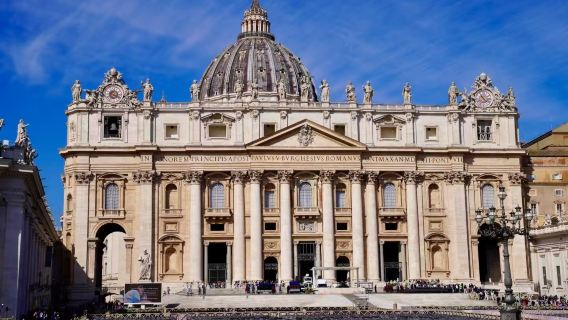
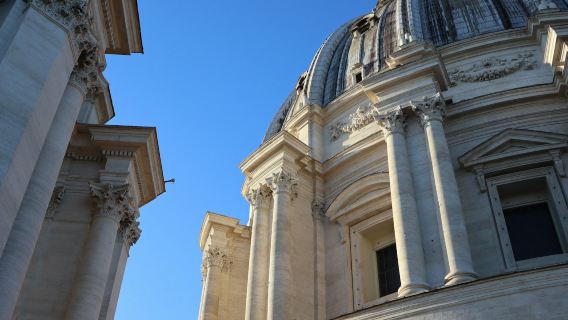
This cathedral is the largest and most magnificent Catholic church in the world. It was built in the 16th century and can accommodate more than 60,000 people. This church was designed by many well-known architects and artists of the Renaissance, including Michelangelo and Raphael. In the center of the church is a dome with a diameter of 42 meters and a height of about 138 meters, with a square in front. Church Overview There are a number of stone pillars standing around the front of the church and the square, each with a statue . There are five gates at the entrance of the church. From right to left, they are the Holy Gate, the Sacrament Gate, the Middle Gate, the Gate of Good and Evil, and the Gate of Death. Each gate is engraved with relief paintings of biblical characters or stories. The Holy Gate only opens on Christmas Eve every 25 years, the last time it was in 2000. Tourists usually enter from the middle door. If you are lucky, you can see the Pope praying for the public on Sunday. The main hall is divided into 3 passages by 6 stone columns, which are very wide. The arches between the giant columns are covered with various sculptures and decorations, which are extremely ornate. The interior of the three treasures church is simply a treasure house of art, which preserves the frescoes and sculptures of many artists such as Michelangelo and Raphael. Among them are three treasures not to be missed: Michelangelo's sculpture Lamentation of Christ, the bronze canopy by Bernini and the throne of St. Peter designed by Bernini. In the small hall on the right side of the gate is "Mourning for Christ" (Pietà, also called "Saint", "Piece of the Virgin"), which depicts the Virgin Mary embracing her dead son Jesus Christ, sad and solemn. Visitors can only watch through the railings and glass cover. On the altar below the big dome is the bronze canopy, which is supported by four spiral copper pillars nearly 20 meters high, which is as high as a five-story building. The center of the canopy is inlaid with white doves, and the four corners are carved with guardian angels. There are four phoenix-shaped copper columns above the canopy, the capitals are closed. The altar is surrounded by 99 ever-bright lights, and only the Pope can hold Mass on the altar. Inside the main hall is St. Peter's Throne, which consists of a large copper-plated wooden chair and a huge group of bronze sculptures radiating golden light. Above the throne, there are many cherubs surrounding the radiant sun pattern, which is a circular stained glass set with doves, which transmits sunlight. In addition to these three treasures, there are many cultural relics worth viewing in the cathedral. Many tourists will come to touch the right foot of the bronze statue of St. Peter, which is said to be blessed by God and bring good luck. There are 13 domes in the Dome Church, including 1 large dome and 2 medium-sized domes. The central one was designed by Michelangelo. The entrance is on the right side of the church entrance (there is a sign saying "Cupola", and an entrance to St. Peter's Tomb "Tomba"). After purchasing the ticket, You can also buy an elevator ticket and climb 320 steps about halfway up. The inner wall of the huge dome is divided into 16 petals by patterns, and each petal has 6 layers of fine stone mosaics, which are extremely delicate. The wall of the walkway under the dome is also covered with detailed mosaic tiles. Standing on the circular platform here, you can overlook the magnificent interior of the church, and the tourists below are very small. Go out from the small door of the dome and continue to climb the narrow stairs to reach the observation deck outside the dome of the main hall of the cathedral, which is a good place to enjoy the panoramic view of Rome.Vatican · Vatican

Sistine Chapel
The Sistine Chapel is the public chapel of the Catholic Pope and the venue for papal elections. But what makes it famous all over the world is the large number of art treasures in the church, especially the frescoes painted by Michelangelo here, which are known as "the Divine Comedy in the history of painting". Church Architecture Overview The Sistine Chapel was built in 1484 and was ordered by Pope Sicustos IV as the Holy Temple of the Pope. The chapel is 40 meters long and 14 meters wide. There are no pillars in the church, and it is a rectangular masonry building. There are 6 semi-circular arched windows at the height of the side walls, and the roof is in the shape of a dome, with an area of nearly 600 square meters. Michelangelo and the frescoes in the church Julius II appointed Michelangelo to be in charge of the interior decoration of the church. It took the artist four years and five months to complete the masterpiece alone, and he was only 33 years old when he was tasked. Twenty-four years after the creation of the painting "Genesis", Michelangelo, who was over sixty years old, returned to the Sistine Chapel in Rome and spent nearly six years creating the great church frescoes on the front wall. The creative process went through hardships, but after the work was completed, the dramatic composition of the picture surprised everyone. Michelangelo's fresco for the vaulted ceiling covers an area of 900 square meters and consists of nine scenes from "Genesis". Michelangelo painted these scenes in reverse order. The characters in the Book of the Testament range from tall Hebrews to pagan witches. It is recommended to bring binoculars in advance when appreciating, you can see more shocking details. In addition, in order to protect the authenticity of the frescoes, cameras are not allowed during church visits. In addition to other frescoes around the church, the walls around the Sistine Chapel also have many ink paintings by important Renaissance artists. Perugia's "Moses Runaway", Botticelli's "Moses in the Life of Moses", and Rosselli's "Crossing the Red Sea" are also worth watching.Vatican · Vatican

Saint Peter's Square
The square is located in front of the cathedral and was built in the 17th century as a gathering place for Christianity. Standing in such a magnificent square, you will be shocked by its momentum. Tourists lined up to enter the church. Overview of the square The square concentrates the architectural essence of various eras and is one of the large public spaces. Take the elevator of the church to the top and overlook the whole city of Rome. The whole square is like a key. Two semi-circular colonnades formed by four rows of Doric columns form a huge ellipse, which surrounds the whole in an arc. The piazza then extends towards the cathedral, which, in Bernini's view, represents the arms of the church open to embrace the world. There are more than 140 sculptures on the colonnade of the square, all completed by Bernini and his students, all of which are religious figures. In the center of the square is the obelisk that Caligula brought back to Rome from Heliopolis. There are two fountains on both sides of the Piazza Fountain. The one on the right was built by Maderno in the 17th century, and the one on the left was a replica designed and later repaired by Bernini. Standing on the white marble between the column and the fountain, looking at the columns in the promenade, it is incredible that the 4 columns seem to have only one, and Bernini's great accomplishments can also be seen from here! Every year, pilgrims and tourists from all over the world come here for pilgrimage. Every January 1st and Christmas, 200,000 people often gather in the square. Every Sunday, thousands of people listen to the Pope's morning prayers broadcast on the balcony and receive the Pope's blessing.Vatican · Vatican

Vatican Necropolis
The Vatican Necropolis is an underground cemetery of great historical and religious significance located in Vatican City, beneath the foundations of St. Peter's Basilica. Dating back to the 1st century AD, the cemetery was an important burial site during the Roman Empire, providing valuable archaeological evidence for the study of early Christian and Roman history. The most famous part of the cemetery is the area associated with St. Peter, who is said to be buried here. The cemetery contains exquisite frescoes and carvings that showcase the artistic style and religious symbolism of ancient Rome. Visitors can take a guided tour to gain an in-depth understanding of these historical sites and feel their religious and cultural importance. Due to its special historical and religious value, the Vatican Necropolis attracts many tourists and scholars. Visits need to be booked in advance to protect these precious sites.Vatican · Vatican

Pinecone Courtyard
Located in the Pinecone Courtyard within the Vatican Museums, the Pinecone Fountain is a striking ancient work of art that combines multiple meanings of history, religion and art. The Pinecone Fountain dates back to the 1st century AD and was probably originally part of the Pantheon in Rome before being moved to the Vatican. The pine cone symbolizes life and rebirth and has important symbolic significance in both Christianity and ancient Roman culture. The base of the fountain is guarded by two peacock sculptures, which were decorations of ancient Roman mausoleums and symbolized immortality and eternity. The Pinecone Fountain is not only an artistic masterpiece, but also a testimony to the rich history of the Vatican. It attracts tourists from all over the world and has become a popular attraction for people to explore the intersection of religion and art. Here, visitors can immerse themselves in a cultural experience that interweaves ancient and modern times and feel the unique charm of local culture.Vatican · Vatican

Bernini Fountain
Vatican · Vatican

Giardino Quadrato (o giardino segreto)
Vatican · Vatican

Octagonal Courtyard
Vatican · Vatican

Sphere Within Sphere
Vatican · Vatican
Experiences you can't miss in Vatican
Featured Cultural experiences in Vatican
View all Cultural experiences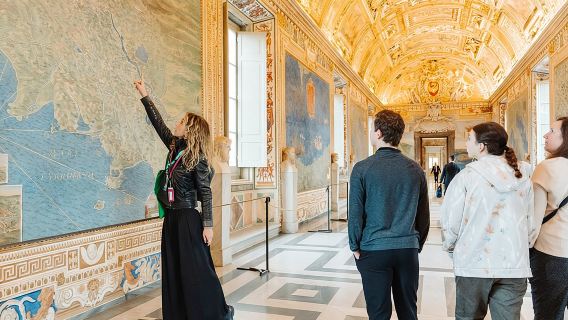
4.6/5
· 354 reviews· 47 bookedFree cancellation
From€85.76

From€32.00
![Rome Vatican Travel Pass [Instant Ticket Issuance/Includes Vatican Museums, Colosseum & Other Popular Attractions/Includes Public Transportation]](https://ak-d.tripcdn.com/images//0586s12000n33lbwv51A3_C_568_320.jpg?_fr=wc)
3.9/5
· 9 reviews· 374 booked189 travellers saved
From€149.00
130 booked
Free cancellation
Book now for tomorrow
From€32.00
Featured Day tours in Vatican
View all Day tours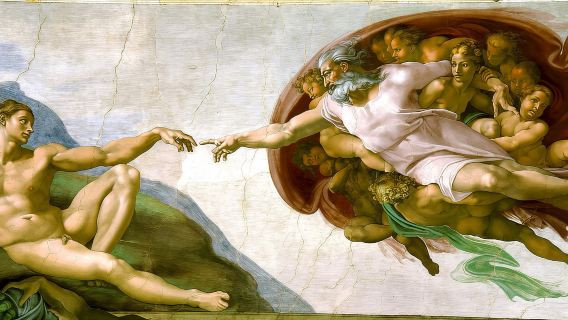
4.7/5
· 3.7k reviews· 297 bookedFree cancellation
Book now for today
92.2% of travelers recommend
5% off
Limited-time sale
From€94.52€99.5
4.9/5
· 3k reviews· 108 bookedFree cancellation
Book now for tomorrow
97% of travelers recommend
From€101.07
4.7/5
· 73 reviews· 252 bookedFree cancellation
Book now for tomorrow
94.5% of travelers recommend
From€39.82
Free cancellation
Book now for tomorrow
From€192.95
4.0/5
· 2 reviews· 130 bookedBook now for tomorrow
37 bookings in 7 days
From€66.36
4.6/5
· 1.4k reviews· 21 bookedFree cancellation
Book now for tomorrow
5% off
Limited-time sale
From€84.55€89
Featured City sightseeing in Vatican
View all City sightseeing
4.4/5
· 1.7k reviews· 58 bookedFree cancellation
Book now for tomorrow
5% off
Limited-time sale
From€18.57€19.55
4.9/5
· 10 reviewsFree cancellation
Book now for today
5% off
Limited-time sale
From€19.00€20
Free cancellation
Book now for tomorrow
From€110.26
4.3/5
· 12 reviewsFree cancellation
Book now for tomorrow
5% off
Limited-time sale
From€46.55€49
5% off
Limited-time sale
From€38.00€40
4.9/5
· 46 reviewsFree cancellation
Book now for today
97.8% of travelers recommend
5% off
Limited-time sale
From€94.05€99
Free things to do in Vatican


More ways to travel from Vatican
Private Tours in Vatican
View More Private Tours in Vatican
Group Tours in Vatican
View More Group Tours in Vatican
What travellers say about Vatican

KeithESeptember 20, 2026
4.0
Wonderful experience. Don't visit in crowded summer months. The snaking queen inside the measum with the swethering heat is not a good experience. Other than that the art pieces are truly impressive. Worth to get the timed tickets, no need to wait in long queue.
Vatican Museums

M25***60June 12, 2026
5.0
Liang Xiaoyue was an absolutely fantastic tour guide! Her explanations were incredibly detailed and engaging. She truly immersed us in a medieval world! Having such a wonderful guide in a foreign land made for a truly welcoming and comfortable travel experience! She was amazing, I highly recommend her!
Saint Peter’s Basilica

淡定求不得May 29, 2025
5.0
It is very convenient to make an appointment and buy tickets, which can reduce uncertainty. We went there at the appointment time and were quickly inside. This place is definitely worth a visit, as it houses a wide variety of collections from successive popes, as well as murals.
Sistine Chapel

poohwubearJune 7, 2023
5.0
Wow, wow, wow! St. Peter’s Square is stunning and larger than I imagined. The fountains, the architecture is all so grand!
Saint Peter's Square

GLS***16August 18, 2012
3.0
Once you have navigated the queue for tickets and made your way into the Vatican museum, the Pine cone courtyard is a good place to gather your breath and plan how to see the many treasures. It is also worth looking around to appreciate both old and modern art in the courtyard.
Pinecone Courtyard


