Things to do in Wutai County
Explore top experiences
Top 10 attractions in Wutai County


Wu Tai Shan
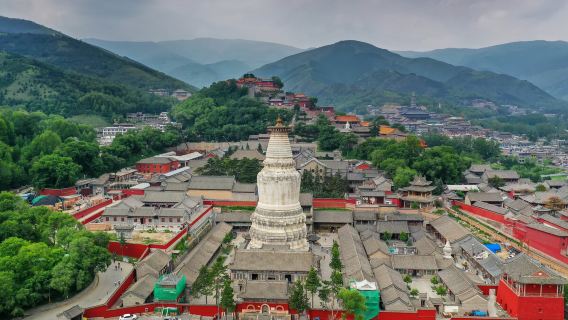
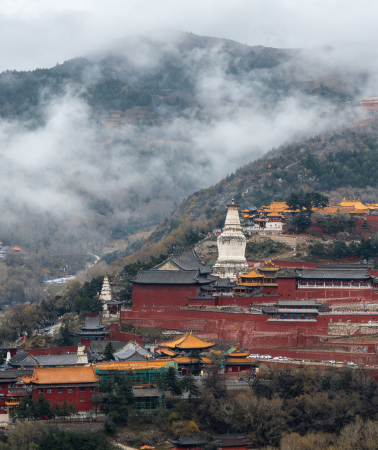
Mount Wutai is one of China's famous Buddhist scenic spots and even contains the bodhimanda (place of enlightenment) of the bodhisattva Manjushri. Taihuai Town is at the geographical center of the Mount Wutai scenic area and serves as the lodging and dining center for the area. Most of the temples are also clustered here, so it is a must-visit for travelers here. Visitors typically stay in Taihuai for 2-3 days, which allows plenty of time to visit the main temples.Wutai County · 39.5 km from downtown

Foguang Temple
Foguang Temple was rebuilt in the tenth year of Emperor Xuanzong's reign in Tang Dynasty (856). In terms of construction time, it is second only to the main hall of Nanchan Temple in Wutai County, which was built in the third year of Tang Jianzhong (AD 782). The existing wooden structure in the country Second place in the building. The Tang Dynasty buildings, Tang Dynasty sculptures, Tang Dynasty murals, and Tang Dynasty inscriptions in Foguang Temple are of high historical and artistic value, and are called "Four Wonders". The halls of Foguang Temple are tall and stacked on top of each other, and the layout is sparse, with clear priorities. The east hall stands on a high platform, and there are 35 painted sculptures of the Tang Dynasty on the Buddhist altar in the hall. Sakyamuni Buddha sits in the center of the Buddhist altar, Amitabha Buddha is on the right, Maitreya Buddha is on the left, and the two Bodhisattvas are Samantabhadra and Manjusri. This is different from ordinary temples. In general temples, Manjushri is on the left and Samantabhadra is on the right. However, in all the temples in Foguang Temple and Mount Wutai, Manjusri is on the right and Samantabhadra is on the left. The Bodhisattva Servant and the Bodhisattva in the hall are both daughters, and there is a little red dot in the middle of the crooked eyebrows, which looks quite charming. In front of the inner wall surrounding the Buddhist altar, there are 500 Arhats, shaped for the Ming Dynasty, which are "sketches" of the same size. It is worth noting that there is a Tang Dynasty mural on the back of the Buddha seat. This painting is 80 cm long and 30 cm high. It depicts the story of the heavenly king subduing demons and ghosts. In the middle stands a woman wearing a flower crown and looking panic. Although this painting is more than a thousand years old, its color is still fresh. There is also a mural painted in the fourth year of Xuanhe in the Northern Song Dynasty (1122), which is also quite distinctive. There are seven round lights on the painting, and there are 10 Buddha statues in each round light, and the names of the Buddhas are also written in the boxes under the round lights. The title on the left: "Liu Taizhi, a Buddhist disciple of Foguangzhuang... Xuanhe four years in early March..." These murals, together with the Buddha statues, some black traces under the beams and the building of the East Hall, are known as the "Fourth" of Foguang Temple. absolutely".Wutai County · 19.8 km from downtown

Shuxiang Temple
Shuxiang Temple was built in the early years of the Eastern Jin Dynasty. It was rebuilt many times in the Ming Dynasty, and it was called the Wutai Mountain "Five Zen Place" together with Xiantong Temple, Tayuan Temple, Bodhisattva, and Luohou Temple. Facing the Fanxian Mountain, it is named after the Manjushri Bodhisattva in the temple. The iconic building of Shuxiang Temple is the Manjusri Pavilion, and the existing temple was built by Zen Master Tielinguo in the Ming Dynasty. When visiting Shuxiang Temple, don't forget to visit the "Prajna Spring" at the gate. "Prajna Spring" means "the spring of wisdom" in Sanskrit. It is said that drinking the spring water here can help grow wisdom and get rid of folly. When the emperors of the Qing Dynasty came to Wutai Mountain to worship the Buddha on the mountain, they would also drink the spring water.Wutai County · 42.3 km from downtown

Nanchan Temple
Nanchan Temple, located in Lijia Village, Yangbai Township, Wutai County, is a rare national treasure in terms of architecture, statues and brick carvings. Nanchan Temple has the oldest existing wooden structure in my country, the Great Buddha Hall. It is the oldest building among the ancient buildings in Mount Wutai. According to the inscription on the beam of the hall, it can be determined that the hall was rebuilt in the third year of Tang Dezong Jianzhong (782 AD), which has a history of more than one thousand years. The Great Buddha Hall is the main building of Nanchan Temple, sharing twelve eaves pillars to support the huge roof. The stigmas of the surrounding eaves and columns are slightly inward, and the four corner columns are slightly higher, so that the arches protruding from each layer are lifted up, and the ends of the ridge are decorated with owl kisses. The main hall is stable and pretty, with a concise structure and a typical large-scale wooden structure in the mid-Tang Dynasty. In the main hall, you can also admire the statues of the Tang Dynasty. In the hall, there is a statue of Sakyamuni Buddha, and on both sides are two Bodhisattvas, Manjushri and Samantabhadra. Whether it is Manjusri Bodhisattva riding a lion, Samantabhadra Bodhisattva riding an elephant, or Ananda and Kasyapa standing still, all of them have a calm demeanor and lifelike expressions. Around the Buddhist altar, there are dozens of Tang Dynasty brick carvings, all of which are masterpieces of Tang Dynasty brick relief art. There are also two stone lions and stone pagodas in Nanchan Temple, which are also relics of the Tang Dynasty. One is a reclining lion, and the other is in the form of "two lions facing each other"; the stone pagoda is about half a meter high and is divided into five floors.Wutai County · 12 km from downtown

Dailuoding
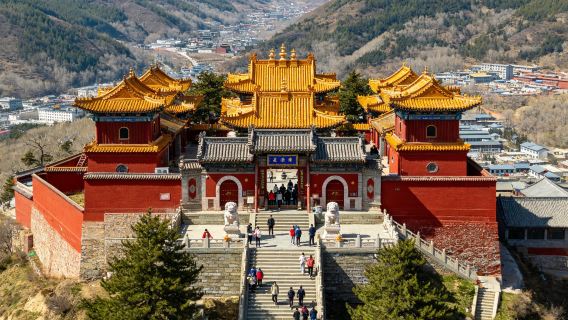
Dailuoding Temple is located east of the central temple cluster area in Taihuai Town, perched on the steep mid-mountain ridge of Dailuoding. Commonly known as the "Little Wutai Pilgrimage," Dailuoding Temple offers a condensed version of the sacred circuit. The five peaks of Wutai Mountain each enshrine a distinct statue of Manjushri Bodhisattva. Completing the full pilgrimage to all five summits to worship these statues is called the "Great Wutai Pilgrimage," which requires considerable physical stamina and ample time. At Dailuoding, replicas of all five Manjushri statues are gathered together, allowing visitors to complete their devotional circuit in one location—hence earning it the name "Little Wutai Pilgrimage." To reach Dailuoding, visitors can either walk or take the cable car. There are two walking routes available. Most visitors choose the staircase path called "Great Wisdom Path," which consists of 1,080 steps spanning approximately 500 meters. Devotees believe this path leads to wisdom, and those who walk it will gain intelligence and insight. Alternatively, there is a northern mountain trail that is longer but gentler in slope. After ascending the stone steps, you'll see the archway, stone lions, and mountain gate of Dailuoding. Along the central axis of Dailuoding Temple from west to east are the Heavenly King Hall, Sandalwood Hall (Standing Altar Hall), Five Manjushri Hall, and Mahavira Hall. Inside the Sandalwood Hall, you'll find a unique standing statue of Sakyamuni Buddha on the altar instead of the usual seated posture. The Five Manjushri Hall houses statues of five manifestations of Manjushri: Childlike Manjushri, Stainless Manjushri, Wisdom Manjushri, Intelligent Manjushri, and Lion's Roar Manjushri. From the summit of Dailuoding, you can gaze upon the surrounding scenery, including the four peaks of Wutai (South, West, North, and Central) as well as numerous temples in the central area of Taihuai Town, such as Tayuan Temple, Pusading Temple, Xiantong Temple, and Wanfo Pavilion (part of the Wutai Mountain Scenic Area). Just a few dozen meters below Dailuoding (along the Dazhi Road hiking path), you'll find Shangshancai Cave Temple, an extension of Shancai Cave Temple. Inside Shangshancai Cave lies a large burial ground called "Shituolin," where many monks who took vows at Wutai Mountain are laid to rest.Wutai County · 43.8 km from downtown

Pusa Ding (Bodhisattva Top)
Pu Si Ding is located on Lingjiu Peak in Taihuai Town, Wutai Mountain. It is said to be the place where Manjusri Bodhisattva lives. It is commonly known as Zhenrongyuan or Da Wenshu Temple. The temple was founded during the reign of Emperor Xiaowen of the Northern Wei Dynasty (471-499). In the 17th year of Shunzhi in the Qing Dynasty (1660), Pu Si Ding was changed from a green temple to a yellow temple, and an abbot was sent from Beijing. During the reign of Emperor Kangxi of the Qing Dynasty, the temple was granted the "Fan-Han Superintendent Seal", and the archway in front of the mountain gate was built in the form of four pillars and seven floors.Wutai County · 43.2 km from downtown

Xiantong Temple
Xiantong Temple is located in Wutai Mountain, Xinzhou, Shanxi Province, China. It is one of the temples with a long history in Wutai Mountain. The temple attracts many tourists and believers with its profound Buddhist culture and unique architectural style. The architectural complex of Xiantong Temple includes the Main Hall, the Heavenly King Hall and the Sutra Library, which show the exquisite craftsmanship of ancient Chinese architecture. The Buddha statues in the temple are exquisitely carved, especially the statue of Sakyamuni Buddha in the Main Hall, which is awe-inspiring. Xiantong Temple is not only a center of religious activities, but also a good place to appreciate ancient architecture and art. The environment around the temple is quiet and suitable for meditation and feeling the atmosphere of Buddhist culture. Xiantong Temple is close to the central area of Wutai Mountain. Tourists can choose to take local tourist buses or taxis to get there. Xiantong Temple will have religious activities during Buddhist festivals. Tourists can choose to visit during these times to experience richer cultural activities. Xiantong Temple is not only a religious holy place, but also an ideal place to explore the history and architectural art of Chinese Buddhism.Wutai County · 43 km from downtown

Tayuan Temple
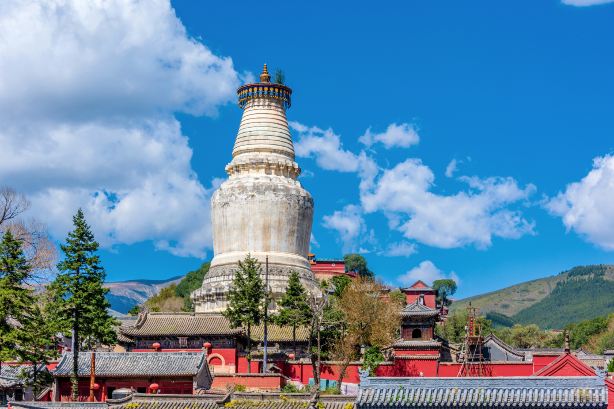
The Pagoda Temple is located south of Xiantong Temple, Taihuai Town, Mount Wutai. It got its name from the big white pagoda in the temple. Its full name is "Sakyamuni Dagoba." The big white pagoda is the main symbol of the temple. It looks magnificent against the backdrop of the temple's red walls and glazed tile roof. The temple is built around the big white pagoda, with structures arranged along a central axis, including a screen wall, memorial archway and gate.Wutai County · 42.9 km from downtown

Longquan Temple
Legend has it that long ago, nine dragons did evil and were pressed under the nine nearby mountains. Nine dragon shadows can be seen at the bottom of the spring, so it was named Longquan. The ancient temple next to the spring was named Longquan Temple. The entire temple faces south and has an ingenious layout. There are more than 160 halls in total. There are three main halls arranged on the central axis of the temple.Climbing up the steps, there is a three-door, four-pillar stone archway in front of the mountain gate. The archway is made entirely of hollow white marble and is covered with patterns of flying dragons, treasures, jade pots, etc. It is exquisite and the craftsmanship is breathtaking. It took a full 10 years to build this archway, which is a treasure in modern stone carving art.At the bottom of the steps under the archway, there is a screen wall made of finely polished blue bricks. The white marble carving in the middle of the screen wall can be seen as a schematic diagram of the main temples in Wutai Mountain. It is ingeniously conceived and finely carved, and is truly unique.In front of the Patriarch Hall in the central courtyard, there is a tomb tower, which was built for the eminent monk Puji from Mount Wutai. It is made entirely of white marble and has an exquisite shape, which is also a unique feature of Longquan.Wutai County · 39.2 km from downtown

Yanqing Temple
Wutai County · 16.1 km from downtown
Experiences you can't miss in Wutai County
Featured Day tours in Wutai County
View all Day tours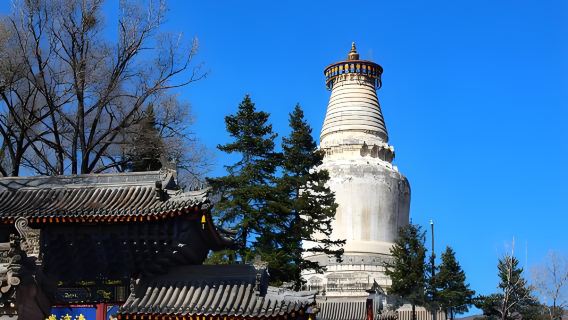
Free cancellation
Instant confirmation
FromCAD 71.89
FromCAD 94.89
Free cancellation
Instant confirmation
FromCAD 379.55
Free cancellation
Instant confirmation
FromCAD 287.54
5.0/5
· 1 reviewFree cancellation
Instant confirmation
55 travellers saved
FromCAD 885.61
Free cancellation
Instant confirmation
FromCAD 76.68
FromCAD 595.44
More ways to travel from Wutai County
Private Tours in Wutai County
View More Private Tours in Wutai County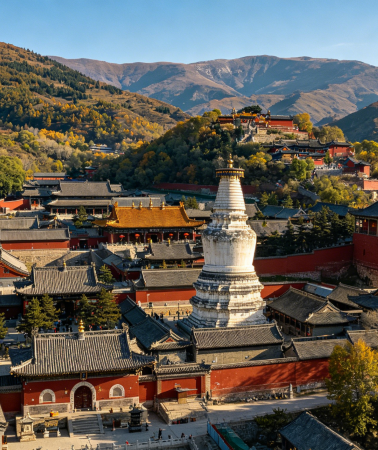


Group Tours in Wutai County
View More Group Tours in Wutai County


Free things to do in Wutai County
Wu Tai Shan
Wutai County · 39.5 km from downtownFoguang Temple
Wutai County · 19.8 km from downtownShuxiang Temple
Wutai County · 42.3 km from downtownNanchan Temple
Wutai County · 12 km from downtownDailuoding
Wutai County · 43.8 km from downtownPusa Ding (Bodhisattva Top)
Wutai County · 43.2 km from downtownXiantong Temple
Wutai County · 43 km from downtownTayuan Temple
Wutai County · 42.9 km from downtownLongquan Temple
Wutai County · 39.2 km from downtownYanqing Temple
Wutai County · 16.1 km from downtown
What travellers say about Wutai County

LIOctober 6, 2026
5.0
It was excellent and breathtaking, especially Daxiantong Temple and Guanghua Temple, which were the most beautiful among the representative temples. It's said there are over 120 temples in the area; two days wasn't enough, so we could only visit some of the famous ones. Thankfully, we climbed 1080 steps to reach the top of Dailuo Peak, making the trip quite fulfilling.
Wu Tai Shan

包包军团August 3, 2026
5.0
Teacher Li Zi's explanations were amazing! Having listened to so many explanations of ancient architecture in Shanxi, Teacher Li Zi's is undoubtedly the best I've ever heard. He has a profound understanding of architectural history and many unique insights, which were truly impressive. He even prepared many props to help us understand the structure of the dougong (bracket set) and the load-bearing functions of different structures. Next time I come to Shanxi, I will definitely seek out Teacher Li Zi again.
Foguang Temple

张家老飞侠September 27, 2025
5.0
When visiting Mount Wutai, the sanctuary of Manjushri Bodhisattva, you should visit Shuxiang Temple to pray for your children's academic success. It's not far from Wuye Temple and Dailuo Peak, and there's parking available, making it very convenient. Mount Wutai is currently well managed.
Shuxiang Temple

山在穷游May 7, 2026
4.0
Nanchansi Temple is a must-visit temple in Xinzhou, often considered one of the two essential temples along with Foguangsi Temple. Entering Nanchansi Temple, I found it exceptionally quiet, perhaps due to off-peak travel. The small courtyard showcased the wisdom left by the ancients. I recommend visiting early, avoiding holidays, as the scenic area isn't large. Besides the statues inside, the exterior structure is also worth seeing.
Nanchan Temple

M43***18February 25, 2025
5.0
History and Background
Dailuoding is located in the east of Taihuai Town, Wutai Mountain, Shanxi Province. It has a long history and is well-known. It was originally named Qingfeng, then changed to Daluoding, and finally named Dailuoding in the 15th year of Emperor Qianlong's reign, and has continued to this day. It was once a place where Buddhist monks practiced Zen in the Tang Dynasty, with a profound cultural heritage and historical background1.
Architectural Features
Dailuoding faces east and west, and the central axis is lined with archways, Tianwang Hall, Tan Hall, Wufang Wenshu Hall and Daxiong Hall. Among them, Tianwang Hall faces east and west, with a single-eaved hard mountain top and four heavenly kings, which is magnificent. There is a pine and a cypress in front of the Daxiong Hall, which was called the millennium pine by Emperor Qianlong. It guards the hall and witnesses the changes of history.
Mountain Climbing Experience
To reach the top of Dailuoding, you need to walk through the Dazhi Road with 1,080 steps. Although it is a bit hard, the scenery along the way and the sense of accomplishment after reaching the top make people feel very satisfied. On the way, you can enjoy the beautiful scenery of Mount Wutai and feel the influence of Buddhist culture. In addition, you can choose to take the cable car, but hiking can better experience the charm of Dailuoding.
Cultural Significance
Dailuoding is called Xiaochaotai because Emperor Qianlong once invited the Five Directions Manjusri to be offered here. Worshiping the Five Directions Manjusri Hall means worshipping the five major chariots. This is not only a holy place for Buddhist believers to worship, but also a good place for tourists to appreciate the scenery and culture of Mount Wutai.
In summary, Dailuoding is an ancient temple that integrates history, culture, architecture and natural landscape. It is worth a visit for both Buddhist believers and ordinary tourists.
Dailuoding

seashanghaiAugust 23, 2023
4.0
The first of the Yellow Temples in Wutai Mountain, it is a must-visit temple when visiting Wutai Mountain. As a royal temple, there are many royal traces in it. The temple is located on the top of a small hill, and it is a bit high to climb up. It is recommended to drive to the back door to enter, and the front door to exit. Going downhill, you can go to Xiantong Temple, the first of the Green Temples.
Pusa Ding (Bodhisattva Top)

亮点liangpointAugust 28, 2022
5.0
Xiantong Temple is the largest and oldest temple among the many temples in Wutai Mountain. It is also one of the five major Zen temples in Wutai Mountain and one of the ten temples listed as cultural landscapes in the World Heritage List. It was first built during the Yongping period of Emperor Ming of the Eastern Han Dynasty (58-75), and most of the existing buildings are from the Ming and Qing Dynasties.
It was first built during the Yongping period of Emperor Ming of the Eastern Han Dynasty (58-75), and most of the existing buildings are from the Ming and Qing Dynasties.
Xiantong Temple

yjw2000September 9, 2021
5.0
Tayuan Temple, located south of Xiantong Temple in Taihuai Town, Mount Wutai, is one of the five renowned Zen monasteries on Mount Wutai. Originally the pagoda courtyard of Xiantong Temple, it became a separate temple after the Ming Dynasty reconstruction of the stupa. The large white pagoda within the courtyard gave it the name Tayuan Temple. The towering white pagoda is the temple's main landmark. Its full name is the Sakyamuni Relic Pagoda, commonly known as the Great White Pagoda. Rising majestically from the ground, it stands out against the surrounding temples of Mount Wutai, making it a striking sight and a symbol of the mountain. The pagoda stands 75.3 meters tall and 83.3 meters in circumference. Its base is square, while its body is shaped like an algae bottle, alternating thick and thin sections, creating a beautiful blend of square and round shapes. The pagoda's roof is capped with eight circular copper plates, arranged according to the eight trigrams: Qian, Kan, Gen, Zhen, Xun, Li, Kun, and Dui. The tower is crowned with a copper dome, approximately five meters high and over twenty-one meters in diameter. It is decorated with thirty-six overhanging eaves, each over two meters long. Three wind chimes are hung at the base of each eave, and together with the wind chimes at the tower's waist, there are a total of 252 wind chimes on the tower. The wind cheers the bells, creating a tinkling sound.
Tayuan Temple

M27***13January 8, 2021
5.0
I went with a tour group. The weather was quite cold. I think it would be better to go in autumn. The environment is beautiful! I went with a tour group. The weather was quite cold. I think it would be better to go in autumn. The environment is beautiful! I will go there again next time I have a chance
Longquan Temple

117***30April 8, 2026
4.0
On the way to Foguang Temple, we stopped by Yanqing Temple. Due to its relatively remote location and inconvenient transportation, Yanqing Temple is considered a less-visited attraction, more suitable for tourists traveling by car or in a group.
Yanqing Temple was originally a three-courtyard layout; the third courtyard remains. The core building of the main Buddha Hall is a Jin Dynasty structure, and the remaining sutra pillar in front of the hall is a fragment of the Song Dynasty "Buddha's Crown Victory Dharani Pillar."
Yanqing Temple is a national key cultural relics protection unit and one of the important filming locations for the movie *The Myth: Black Wukong*.
There weren't many tourists when I visited. Entry is free with a valid ID card, and vehicles can be parked in the open space in front of the temple gate.
Yanqing Temple


