Xixia

Things to do in Xixia

Search attractions or local attractions & tours
Search

Explore top experiences

Top 10 attractions in Xixia

View all Attractions
Xixia Dinosaur Relics Park
No. 2 of Family-friendly Attractions in Nanyang

Xixia Dinosaur Relics Park

5.2
4.4/5
1.1k reviews
Xixia Dinosaur Relics Park, located in Danshui Town, Xixia County, Nanyang City, is an important attraction in Funiu Mountain National Geopark. The Xixia Dinosaur Site belongs to the Cretaceous rift basin deposits. More than 1,000 dinosaur egg fossils have been exposed in the upper layers, and there are at least 16 egg-laying layers in the lower layers. Among them, the Xixia giant elongated egg and the Gobi prismatic egg are rare in the world and are the symbols of Xixia egg fossils. A large number of dinosaur egg fossils have been unearthed in Xixia, which are diverse, widely distributed and well-preserved. They are known as the ninth wonder of the world after the Terracotta Warriors and Horses of Qin Shihuang's Mausoleum. The Xixia Dinosaur Relics Park is mainly composed of four parts: the Geological Science Plaza, the Dinosaur Egg Fossil Museum, the Dinosaur Egg Site and the Simulated Dinosaur Park. Geological Science Plaza: It is conceived with the time coordinate axis of the development of life on earth as its theme. From north to south, it is divided into four parts: Archaean Era, Archaic Era, Phanerozoic Era and Modern Era. The Phanerozoic Era is divided into Paleozoic Era, Mesozoic Era and Three regions of the Cenozoic Era. When tourists come to the modern part of the area, they can see the theme monument of the geopark erected here, and the ground is also paved with dinosaur bone fossil reliefs, etc., which are based on the Triassic period when dinosaurs began to appear, the prosperous Jurassic period, and the Cretaceous period when they became extinct. The boundary forms a square atmosphere with great archaeological significance. In the Dinosaur Egg Fossil Museum, a group of egg fossils from the Xixia Basin is displayed. The giant elongated eggs are currently the only type unique in the world, and they are also rare treasures bestowed by nature to mankind. The Gobi prismatic egg found in the upper part of the Gaogou Formation is the third place in the world where such egg fossils have been found. In the scenic area, tourists can also visit the dinosaur egg site. The types of dinosaur eggs found here include: garden-shaped eggs, Sanli Temple tree-shaped eggs, elongated eggs, Xixia giant elongated eggs, Gobi prismatic eggs and branch eggs. . The simulated dinosaur park in the scenic area is a favorite place for children. A large outdoor area has been opened up to display the "brothers and sisters" of the dinosaur family. Every simulated dinosaur is lifelike and vivid. These dinosaurs are very representative species of the dinosaur family. You can also watch 4D movies and experience the scene of a volcanic eruption in the scenic area. These two projects require additional charges. Sometimes there are many tourists and you need to wait in line for some time.Xixia · 21.5 km from downtown
Laojun Mountain Scenic Spot
No. 1 of Fall Viewing Attractions in Henan

Laojun Mountain Scenic Spot

8.6
4.7/5
16.6k reviews
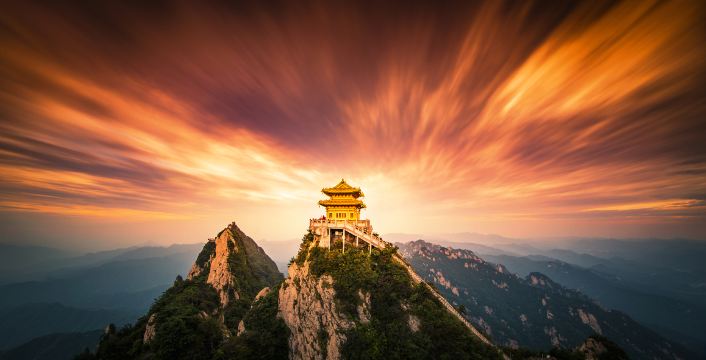
It is said that Laojun Attraction is the place where Li Er (Laozi), the founder of Taoism, practiced in seclusion. During the Northern Wei Dynasty, a temple was built in the mountain to commemorate it. Later, it was named "the famous mountain in the world" and has always been popular. The mountain is lush with trees and picturesque, and mountain springs can be seen everywhere. In the golden autumn, this is the best choice for viewing red leaves in the Souvenir areas. After the rain, Laojun Mountain is surrounded by clouds and mist in each peak, like a fairyland in the sky. The Attraction area is huge and is mainly divided into the main Laojun Mountain Attraction in the center, the Dream Valley Attraction in the west, and the Zhaigou Attraction Area in the east. Generally, tourists will spend a day to visit the main Laojun Mountain Attraction, which is also the most developed area of ​​the entire Attraction. If you go to the top of the mountain, you will also have the opportunity to see the beautiful sea of ​​clouds, sunrise, and sunset. The main Attraction of ​​Laojun Mountain includes Zhongtianmen, Jinding, Laojun Temple, Nantianmen, Yuhuangding and Mazongling. Since its construction in the Northern Wei Dynasty, Laojun Temple has been the center of worship for pilgrims from the Central Plains; the Taoist temple on Yuhuangding enshrines the Jade Emperor and is also a good place to view the scenery in the mountain; Jinding and Mazongling are good places to watch the sunrise and the sea of ​​clouds. Recommended itinerary: Day Trips Most tourists choose to spend a day to visit the main Attraction of ​​Laojun Mountain. Lingguan Hall - the statue of Laojun at the foot of the mountain - Lincu Hall - Zhongtianmen - tree-lined trail - Lying Yunsong - Bodhisattva Hall - Laojun Temple, Jinding - Yuhuangding, and then return along the original route. Tourists can choose to walk the whole way or take a "walk + cable car" tour of Laojun Mountain according to their own conditions. There is the Zhongling Cableway of the Attraction between the Lingguan Temple at the foot of the mountain and the Zhongtian Gate on the mountainside. Take the Zhongling Cableway and then walk from Zhongtian Gate to the top of the mountain, Yuhuang Peak. The road from Zhongtian Gate to the top of the mountain is not very steep and can usually be completed in about an hour. Two-day tour If you have enough time, you can spend two days to visit Laojun Mountain. The general route is: D1: Visit the main Attraction of ​​Laojun Mountain and stay in the mountain that night. D2: From the top of Laojun Mountain, choose to go down the mountain to the Dream Valley in the west or the Zhaigou Attraction in the east, and arrive at the west gate and east gate of the Attraction respectively. In the main Attraction of ​​Laojun Mountain, you can stay near Zhongtianmen on the mountainside and Laojun Temple on the top of the mountain. There are hotels near Zhongtianmen with better accommodation conditions, while the accommodation conditions Souvenir Laojun Temple are relatively poor. If you plan to go to the top of the mountain to watch the sunrise the next morning, you can stay Souvenir Laojun Temple. Compared with the Zhaigou Attraction in the east, the mountain roads in Dream Chasing Valley are smoother, and tourists can choose one of them to go down the mountain according to their preferences. There are many places in the Attraction that can provide Dining services for tourists, but the signboards on some sections of the road in the Attraction are not yet very complete, so tourists need to pay more attention when visiting.Luanchuan · 50.9 km from Xixia
Funiu Underground River

Funiu Underground River

3
4.1/5
83 reviews
The Funiu Underground River Attraction in Xixia, Henan Province is located 30 kilometers north of Xixia County, 3 kilometers from the famous Chinese town Shuanglong Town, 6 kilometers from Longtangou Attraction, 13 kilometers from Wudaozhuang and Laojundong Attraction, 50 kilometers from Laojieling Ski Resort, 16 kilometers from Guanhe Rafting, and 60 kilometers from the center of Luanchuan County Attraction Group. It is located in the golden triangle of the golden route of Xixia Tourism in Henan Province. The tourism resources of the Funiu Underground River Attraction are extremely unique and special: boat rides in the cave, viewing the rock wall plank road, a large number and variety of bat groups, and a variety of rock paintings and lifelike stalactites are scattered all over the place. It is unique in the Central Plains and in the north. The scenery is like a dream, beautiful, and like being in a paradise. The Funiu Underground River Cave is warm in winter and cool in summer, with a normal temperature of about 18 degrees. It is a good place and choice for tourism in all seasons. The underground river is crystal clear, with schools of wild fish, shrimps and crabs swimming, the deep and unfathomable green lake, the rapids and fish swimming in the shallow bottom, the canyon with strange rocks and cracked rocks, which makes tourists imagine and mysterious; the boat paddles, the water lanterns shine, the golden walls are brilliant, just like stepping into the underwater dragon palace, giving rise to endless reverie. The stalactites in the cave are unique: the "Welcome Hall" is majestic, the "Penglai Fairy Pavilion" is natural, the "Sky-supporting Jade Pillar" stands tall, and the "Buddha's Light Shining" is vivid. When tourists take a boat into the underground river, they enter the mystery, the novelty, the tranquility, the time and space tunnel, and the underground palace. Warm reminder to dear tourists: quietly, quietly, do not disturb the Buddha, the bats, the sleeping lion, and the Eight Immortals in the dream in the cave. Funiu Underground River is becoming a new tourist attraction in Henan and even China. It warmly welcomes guests from all directions with its extremely unique tourist resources!Xixia · 21.3 km from downtown
Emperor Qinshihuang's Mausoleum Site Museum
2026 Global 100 - Best Things to Do

Emperor Qinshihuang's Mausoleum Site Museum

10
4.7/5
150.1k reviews
The Qin Shihuang Mausoleum Museum (Terracotta Army) is a large-scale archaeological site museum built on the site of the burial pits of the Qin Terracotta Army, located about 1.5 kilometers east of the Qin Shihuang Mausoleum mound. In March 1974, farmers in Xiyang Village accidentally unearthed fragments of terracotta warriors while digging a well, and archaeological exploration confirmed Pit No. 1. In 1976, Pit No. 2 and Pit No. 3 were successively discovered north of Pit No. 1, bringing this army that had been sleeping for more than two thousand years back to the light of day. The discovery of the Qin Terracotta Army is hailed as "one of the great archaeological discoveries of the 20th century." Pit No. 1 is the main military formation among the three pits, stretching over 200 meters from east to west, and is estimated to contain approximately 6,000 terracotta warriors and horses. Looking down from the edge of the pit, armored warriors, chariots, and terracotta horses are arrayed in actual battle formation facing east. A closer look reveals that each figure is unique in its facial features, hairstyle, beard, and even hand gestures. The terracotta figures were originally painted, but much of the paint has peeled off and discolored due to fire and prolonged burial. Pit No. 2 is L-shaped, with crossbowmen, cavalry, and chariot soldiers arranged in a mixed formation. The vividly depicted kneeling archer was unearthed here. Pit No. 3 is smaller in size; the unearthed ceremonial guards and chariots have led scholars to believe it served as the command post for the armies in Pit Nos. 1 and No. 2, an ancient term for a "military headquarters." The pits also yielded bronze swords, spears, lances, crossbows, and numerous arrowheads, many of which remain sharp even after more than two thousand years, demonstrating the exquisite metallurgical craftsmanship of the Qin Dynasty. The Terracotta Army and the Mausoleum of the First Qin Emperor at the foot of Mount Li were originally one entity. After ascending the throne at the age of thirteen, the First Qin Emperor began constructing the mausoleum, conscripting hundreds of thousands of laborers and continuing the construction for more than thirty years. The Terracotta Army, which used terracotta warriors to replace human sacrifices, was the underground guard that protected this imperial mausoleum. To avoid crowds during your visit, consider starting with Pit 3 and Pit 2, and then leisurely experiencing the awe-inspiring sights of Pit 1 at the end. After viewing the terracotta pits, you can take the attraction shuttle bus to Lishan Garden, where the Mausoleum of the First Qin Emperor is located. The Acrobatics Terracotta Pit, the Civil Official Terracotta Pit, and the Bronze Chariot and Horse Museum are all located within the park. The two painted bronze chariots and horses, cast at half the scale of the real chariots, are exquisitely crafted and adorned with dazzling gold and silver ornaments, making them well worth a special trip to see.China · Xi'an
Shaanxi History Museum
2026 Asia 100 - Family-friendly Attractions

Shaanxi History Museum

9.5
4.8/5
35.2k reviews
Shaanxi History Museum is a large modern museum built after China's reform and opening up and officially opened in 1991. The building was designed by architect Zhang Jinqiu and adopts a Tang-style architectural layout of "central hall and four corner towers," with a symmetrical central axis and a clear hierarchy of primary and secondary structures; in 2016 it was included in the first batch of the "Chinese Architectural Heritage of the 20th Century" list. Shaanxi was once the political center of dynasties such as the Zhou, Qin, Han, and Tang, and the museum's collection spans a million years of history, covering categories such as Shang and Zhou bronzes, pottery figurines of successive dynasties, Han and Tang gold and silver wares, and Tang tomb murals, with a total of over one million items. The permanent exhibition "Ancient Civilization of Shaanxi" follows a chronological main line and presents the historical process from prehistoric Lantian Man to the eve of the Opium War across three galleries, with the Zhou, Qin, Han, and Tang periods as the focus. The east and west sides of the central hall each host a thematic exhibition: on the west side, "Treasures of the Great Tang: Hejiacun Hoard Unearthed Artifacts Exhibition" concentrates on fine gold and silver wares of the High Tang, while on the east side, the "Tang Dynasty Mural Treasures Gallery" displays authentic murals removed from Tang tombs, with subjects covering figures, architecture, ceremonial guards, and more, making it a uniquely distinctive category of the museum's collection. Among the many artifacts in the museum, several are particularly notable. The agate cup with gold-inlaid beast head, from the Hejiacun hoard, is carved from a single piece of banded agate into the form of a curved-horn beast head, resembling Central Asian rhyton cups, and is one of the first batch of cultural relics prohibited from being exhibited abroad. The tri-color glazed camel carrying musicians figurine vividly recreates the lively scene of musicians playing and singers performing on a camel's back, with bright glaze colors and figures with distinct expressions. The Empress's Seal is made of Western Han Hetian mutton-fat jade and carved with a chi-tiger knob, and is the only known actual jade seal of a Han dynasty empress discovered to date. In addition, the gilt silver flask with a dancing horse holding a cup design, the celadon ewer with an overhead handle and bottom-filling design, and the black-glazed oil-spot bowl each have their own distinctive features. The gold and silver wares unearthed from the Hejiacun hoard are concentrated in the thematic gallery and are a highlight of any visit; visitors are advised to allow time to examine them closely.China · Xi'an
Longmen Grottoes
2026 Asia 100 - Best Things to Do

Longmen Grottoes

8.9
4.7/5
62.2k reviews
Longmen Grottoes are located in the southern suburbs of Luoyang, Henan Province, on the cliffs along both banks of the Yi River. As one of China's three major grotto art treasures, they were inscribed on the World Cultural Heritage list in 2000. The grottoes were first carved when Emperor Xiaowen of Northern Wei moved the capital to Luoyang, and construction continued through the Eastern Wei, Western Wei, Northern Qi, Sui, and Tang dynasties, with the vast majority of niches and statues left from the Northern Wei and Tang periods. Today, more than 2,000 niches and over 100,000 statues remain, along with a large number of inscriptions and steles, making the site an important representative of Chinese stone carving art. The attraction is divided by the Yi River into two parts: West Hill and East Hill. The West Hill Grottoes are the essence of the site, carved from the Northern Dynasties through the Sui and Tang periods. Famous caves include Guyang Cave, Binyang Cave, Lotus Cave, Wanfo Cave, and Fengxian Temple. The Lushena Buddha at Fengxian Temple stands about 17 m tall, making it one of the larger Buddha statues at Longmen Grottoes. Its face is dignified and serene, with a faint smile, and legend holds that it was modeled on the appearance of Wu Zetian, earning it the name "Oriental Mona Lisa." The inner walls of Wanfo Cave are densely covered with about 15,000 small Buddha statues, each only a few cm tall, neatly arranged and finely crafted. Guyang Cave is the earliest cave carved at Longmen, and its inscription calligraphy is exquisite; the selected "Twenty Masterpieces of Longmen" are representative works of Wei stele calligraphy. Binyang Cave consists of the South, Middle, and North caves and took more than twenty years to complete. Its original reliefs depicting emperors and empresses worshipping the Buddha were looted and lost overseas in the 1930s. In Binyang North Cave, a Buddha statue has a distinctive hand gesture, with the right index and middle fingers raised in a shape resembling the modern "scissors hand," though it is actually a Buddhist mudra, and it once sparked heated discussion online. The East Hill Grottoes are mostly Tang dynasty works and are smaller in scale than those on West Hill, but from the opposite bank visitors can enjoy panoramic views of West Hill from different angles, especially distant views of the Lushena Buddha. The attraction also includes Xiangshan Temple and Bai Juyi Memorial Park (Bai Garden). The Tang dynasty poet Bai Juyi lived in Luoyang in his later years and once praised it, saying, "Of the scenic splendors of Luoyang's surrounding mountains and waters, Longmen ranks first." When visiting, simply follow the route West Hill—East Hill—Xiangshan Temple—Bai Garden, proceeding in one direction without backtracking. The West Hill Grottoes are densely packed with content, so it is advisable to set aside ample time for a closer look; East Hill is quieter and more secluded, suitable for a brief visit and gazing across the river when energy is limited.China · Luoyang

Experiences you can't miss in Xixia

Xixia Today's weatherCloudy 7-20℃
Xixia weather for the next 2 days11/5: 7-23℃, 11/6: 7-21℃

Free things to do in Xixia

What travellers say about Xixia

user-avatar
涅阳小赵October 11, 2026
5.0
Henan's underrated 5A-level scenic spots feature geographical wonders and pristine forests, making them excellent summer retreats. They are suitable for those who enjoy tranquil landscapes and learn about geography, but not for those who are simply lazy, dislike long walks, or crave trendy nighttime lights.

Laojieling Tourist Resort

user-avatar
北博腾魏延May 28, 2026
5.0
The exhibit mainly features dinosaur eggs, and the collection is very rich. There's a horizontally excavated tunnel that cuts directly through the strata containing dinosaur egg fossils, showcasing three different geological layers. At the end is a vertical shaft leading directly to the surface, revealing the layered distribution of dinosaur eggs vertically. The core exhibition hall houses a collection of large dinosaur fossils from various regions, including a gigantic dinosaur estimated to be 10-20 meters long, spanning the entire hall – truly spectacular. It's very interesting for children and a rare and awe-inspiring geological wonder for adults. While the exhibition hall is large, the exhibits are relatively limited.

Xixia Dinosaur Relics Park

user-avatar
翡拉瓦尔September 11, 2020
5.0
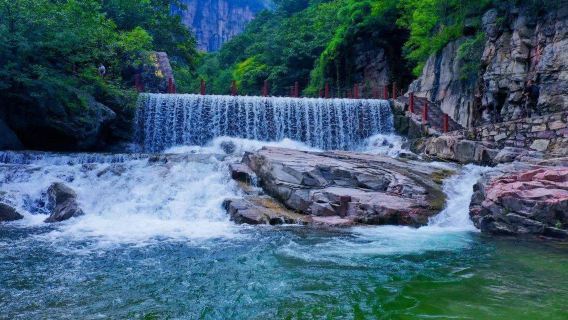
Longtangou is still worth going, especially in the summer when there is a lot of water. You can see the waterfall and play in the water. Although it is not particularly cool inside, it is much cooler and definitely cooler than in the city. I recommend everyone to go and have fun.

Longtangou Scenic Area

user-avatar
诗酒趁年华0707April 6, 2021
5.0
There are three scenic spots in Laojun Cave, Laojun Cave, Taiqing Valley and Yeren Valley. You can take the scenic transportation directly to Yeren Valley. If you take your time to play in Yeren Valley, it will take about three hours, and the scenery is nice. Walk down to Taiqing Valley directly, which is very gentle, with good scenery, and there are some places for leisure and entertainment. It takes about an hour to walk down. Take the scenic transportation to Laojun Cave. Laojun Cave mainly has two caves, Laojun Cave and Qingniu Cave. Qingniu Cave is longer and a little depressing. It takes less than an hour to walk down. Take the scenic transportation or walk to the entrance of the scenic area. There is a farmhouse restaurant next to it. The food is good and affordable. The hotel conditions are average, but living in the mountains is also unique. The scenic transportation pass is 15 yuan, which is not expensive.

Xixia Laojun Cave

user-avatar
艳阳妮妮November 3, 2026
4.0
The location for the creative beer was illogical; it was impossible to get one, especially for those taking the tour bus up the mountain. I ended up buying another bottle. The most fun part was sliding down the mountain on my butt – a less strenuous activity and more interesting. The summit was absolutely stunning, but the order was terrible; nobody cared or looked after you. You had to shout to get down the mountain, otherwise you wouldn't be able to get down at all.

Laojun Mountain Scenic Spot

user-avatar
纽约漫时光October 17, 2024
4.0
A relatively small attraction, not too big inside, with a river outside. You can row a boat in, get off the shore at the innermost part, and then walk out. Some of the stalactites inside are still unique. If you have time, you can come and see them.

Funiu Underground River

user-avatar
Anonymous userNovember 3, 2026
5.0
日本人は、ほとんど見ない。地下鉄でも行けるが、中心部から出てるバスを利用したほうがいい。地下鉄とローカルバスで行ったが、時間が掛かる。ローカルバス探したり、待ったり と、時間がもったいない。

Emperor Qinshihuang's Mausoleum Site Museum

user-avatar
M85***60November 24, 2024
5.0
🎉Snow carnival, Laojieling Ski Resort🎿, waiting for you to cross the mountains and ridges! 🏔️Want to feel the joy of snowflakes flying? 🌨️ Come to Laojieling Ski Resort, where the snow is pure and the snow trails are wide. Whether you are a novice or an expert skier, you can find your own fun here! 👏 🎒 Take your skis, put on your snow clothes and snow hats, and let's enjoy the speed and passion of winter here together! 😎 📸 Here, you can also take super beautiful snow photos, which will instantly make your circle of friends explode! 📱 🎉 Come to Laojieling Ski Resort and feel the charm of the snow together! 🎉 Laojieling Ski Resort #Snow Carnival #Winter Fun #Ski Resort

Laojieling Ski Resort

user-avatar
吃菠萝的人儿1November 2, 2026
5.0
The Shaanxi History Museum is absolutely worth a special trip! The ticket for the Treasure Gallery included a guided tour, and I also visited the Basic Gallery, making for a very fulfilling experience. The Treasure Gallery's exhibits are of extremely high quality, ranging from Shang and Zhou bronzes to Tang Dynasty gold and silver artifacts—each piece is a national treasure. The He Zun bronze vessel, the gilded silver ewer with a dancing horse holding a cup, the gold-inlaid agate cup with an animal head… even through the glass, you can feel the exquisite craftsmanship and majesty that transcends a thousand years. The Tang Dynasty artifacts, in particular, are breathtakingly magnificent. The Basic Gallery is arranged chronologically, from the Lantian Man to the Sui and Tang Dynasties, systematically tracing the development of Shaanxi and even the entire Chinese civilization. After seeing it, I truly understood the significance of Shaanxi as the "Capital of Thirteen Dynasties." The guided tour was a huge bonus. The guide didn't just read from a textbook; instead, they brought out the historical stories and craftsmanship details behind the artifacts in a lively and engaging way. Many details that I would have missed on my own were highlighted, making the experience far exceed my expectations. It's recommended to make reservations in advance via their official WeChat account. Tickets for the Treasure Gallery are in high demand, so it's best to book early. If you can only visit two museums in Xi'an, the Shaanxi History Museum is a must-see!

Shaanxi History Museum

user-avatar
小胖鸡出门减肥November 3, 2026
5.0
The Longmen Grottoes are a very worthwhile site to visit. Unlike the relatively enclosed grottoes, the Longmen Grottoes offer a very direct and close-up view of the scenery inside and outside the grottoes, especially the Vairocana Buddha and its disciples, bodhisattvas, heavenly kings, and guardians. The close-up view is truly breathtaking!

Longmen Grottoes

Trip Moments in Xixia

Popular cities near Xixia

Frequently asked questions

What are the recommended tours and excursions in Xixia?

When choosing a tour, start with how much time you have and the kind of experience you're looking for. Trending options right now include 1-day tour to Laojieling + Xixia Dinosaur Relics Park in Nanyang, Henan - Bilingual service available, 1-day tour to Shiyan Museum + Wulong River + Dongfeng Hometown in Hubei with Chinese and English services available, and 1-day tour to Danjiangkou Dam + Dongfeng Auto Museum + Fu Mountain Park in Shiyan, Hubei with Chinese and English services. Check the real-time availability and itinerary before you book.

As of November 4, 2026, the reference price for day tours and activities in Xixia is around CAD 241.07 – CAD 602.67. Rates vary by duration, group size, transport, tickets, meals, and any special admission requirements. Before you book, please confirm the billing currency and whether the price is quoted per person or per group.

Get help anytime, anywhere within 30 secondsContact customer support

Change and cancellation policies vary by attractions and tours. Please check the product details page for more information.

Ticket prices may vary between weekdays and weekends, as well as during peak and off-peak seasons. When booking with Trip.com, you can also use Trip Coins to get extra savings. For more tips on booking discounted tickets, please visit Trip.com for the latest information.