Hotel Package Receiving in China: A Guide for Canadians


China's e-commerce runs on parcels, and hotels there have built a service around it: you order online, address the delivery to your hotel, and collect it at the front desk. For Canadian travellers used to hotels that won't touch a guest's package, that's a genuine and useful difference. In this guide I'll explain what hotel package receiving is, why it matters, how to do it step by step, and the fees, limits, and quirks to know before you fly. I've used it myself on trips through Shanghai and Chengdu, and it's one of the simplest ways to shop China's platforms without hauling everything home.
Shanghai
Beijing
Chengdu
Shenzhen
See all flights


What Hotel Package Receiving Is — and Why It Matters to Canadians
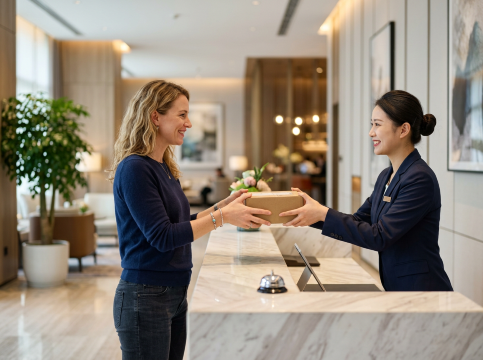
Instead of shipping a parcel to your home, you send it to the hotel where you're staying. A courier hands the package to reception, and you collect it whenever it suits you. In China this is a normal, everyday service rather than a favour — front desks deal with guest parcels all day long. There's no application, no deposit, and no special arrangement to set up in advance.
- You order on a Chinese platform — Taobao, Tmall, JD.com, or Pinduoduo — and pay as usual.
- You enter the hotel as the delivery address, in Chinese where possible.
- The courier drops the parcel at the front desk or concierge.
- Staff log it under your name, and you pick it up at reception, usually free of charge.
- Nothing is special-ordered — it's the same system locals use for everyday shopping.
Why It's Worth Knowing as a Canadian
If you enjoy shopping, this quietly changes the whole trip:
- Lower prices — many goods cost less on Chinese platforms than the Canadian equivalent, from clothing to phone accessories.
- No luggage problem — buy as you go instead of packing everything up front or paying for extra baggage.
- Gifts and essentials — order souvenirs, tea, or a replacement charger and collect them later.
- Fewer detours — your purchase comes to you, not the other way around.
- More choice — you can buy things that simply aren't sold back home.
- A test run for bigger buys — try the process with something small first, then trust it for larger purchases.
- Order early, travel light — place orders near the start of your trip so everything is waiting before you fly home.
How It Differs from Canada
The assumptions are entirely reversed. In Canada, receiving a guest parcel is the exception; in China, it's the rule. That single difference shapes how you should plan your shopping.
Aspect | Canada | Mainland China |
|---|---|---|
Routine or exceptional? | Rarely routine; handled case by case | A standard, everyday service |
Cost | Often a handling fee, or refused | Usually free |
Staff expectations | Not expected to accept parcels | Expected, and used to it |
Delivery to the front desk | Not guaranteed | Normal |
How Hotel Package Receiving Works: Step by Step
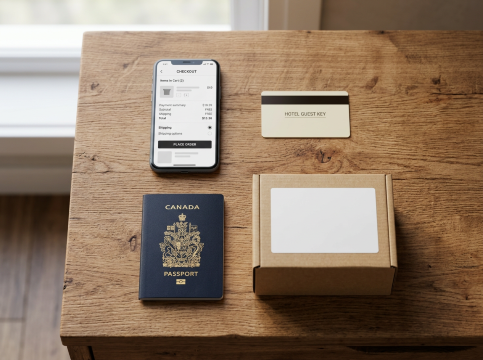
Here's the process from booking to pickup. It's straightforward, but a few details decide whether it goes smoothly — especially the address and the phone number.
Step 1 – Confirm the Policy Before Booking
- Most mid-range to luxury hotels in big cities accept parcels as a matter of course.
- Some budget guesthouses and smaller independent properties may not, or only informally.
- Check the hotel's FAQ page, message the property through the booking platform, or skim recent guest reviews.
- A two-minute check now saves a frustrating afternoon later.
Step 2 – Format the Delivery Address Correctly
Chinese addresses run from large to small, and Chinese characters matter most:
- The hotel's full name in Chinese characters (汉字) — this is essential for the address to resolve.
- “Front desk” (前台代收), then your own name as the recipient.
- Street address, district, city, province, and postal code, in that order.
- Your room number, if you already have it.
- Incomplete addresses are the single most common cause of failed deliveries, so don't skip a line.
Step 3 – Place Your Order
- Use Taobao/Tmall, JD.com, or Pinduoduo, and save the hotel as an address you can reuse.
- You'll usually need a Chinese mobile number for OTP codes and delivery notifications.
- Without one, many checkouts simply won't complete — plan for this before you fly.
- Get a short-term Chinese SIM, or ask a friend or the hotel to help.
- Pay with Alipay or WeChat Pay; foreign cards often work, but confirm first.
- Save the tracking number somewhere you can find it, in case the app language trips you up.
Step 4 – Tell the Front Desk
A quick heads-up avoids confusion at the counter:
- Say a parcel is coming, and show a note or a translation app.
- Useful phrase: “我有一个快递会寄到酒店,麻烦帮我收一下” — “I have a package being delivered to the hotel, please help me receive it.”
- Staff log the parcel under your name and the courier company, and store it behind the desk.
- If you haven't checked in yet, give your reservation name and arrival date so they can match it to you.
Step 5 – Collect and Inspect
- Go to the front desk with your name or room number.
- You may be asked for ID or a room key, and to sign a log or receipt.
- Check the parcel is yours and undamaged before you leave the desk.
- Arriving early or late? Most hotels will hold it — but storage limits apply.
- If tracking says it arrived and reception can't find it, ask them to check under your name and the courier company.
- Ask the front desk to note the pickup in their log, so there's a record.
Where It Works Best: Cities, Hotels, and Property Types
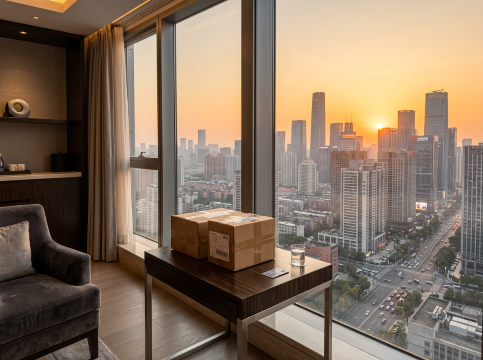
Dense delivery networks make some cities especially easy:
- Beijing, Shanghai, Guangzhou, Shenzhen, Chengdu, and Hangzhou — high order volumes and smooth, practised handling.
- Smaller towns and rural areas — less standard, so ask the hotel first.
The larger and better-connected the city, the more routine the process becomes — front-desk staff have seen it all before, and couriers know exactly where to drop a hotel parcel.
International Chains vs. Local Hotels
Both work; the trade-off is mostly language and structure:
Aspect | International chains | Local hotels |
|---|---|---|
Language | Often English-speaking staff | Limited English; translation helps |
Process | Formal and logged | Flexible and informal |
Best for | First-timers who want certainty | Travellers who want a personal touch |
If communication worries you, a chain hotel is the safer bet; if you'd rather something more personal, a good local hotel is often just as capable.
Extended Stay Hotels and Serviced Apartments
If you plan to shop seriously, these are the best fit. They offer more space, dedicated mail areas, and staff used to holding deliveries for guests over many days — which takes the pressure off storage limits. For a steady stream of parcels, that beats a single hotel room, and many will even deliver straight to your door once the parcel clears reception.
China Hotel Package Receiving Rules, Fees, and Restrictions
Storage Time Limits
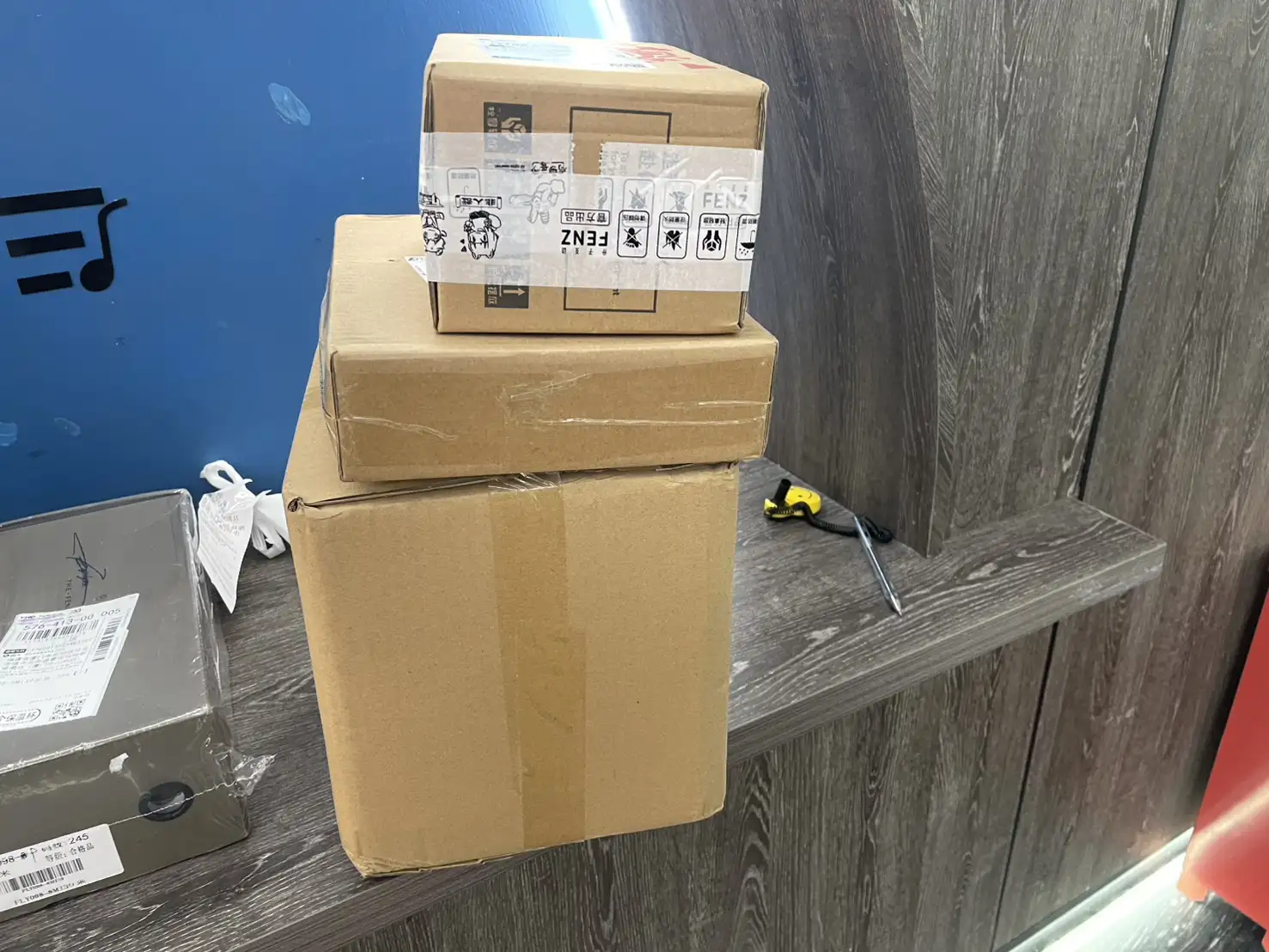
Most hotels hold a parcel for a limited window after your checkout date — often a matter of days. Policies vary by property, so confirm the window if you're ordering well ahead of your trip, or leaving and returning. Don't assume a package will be kept for weeks, and collect promptly once it arrives. If you're unsure, ask about the window when you confirm the policy in Step 1.
Handling Fees
Receiving is usually free, but five-star and other high-end hotels sometimes charge a handling fee, especially for large or numerous parcels. There's no single national rate, so ask in advance — ideally in writing through the booking platform — and you won't be surprised at checkout. A quick message before you order is usually enough to get a clear answer.
Restricted and Prohibited Items
Hotels typically won't accept:
- Perishable food.
- Oversized or heavy freight.
- Hazardous materials.
- Items that violate Chinese regulations.
- High-value goods that require the recipient's own signature.
When in doubt, ask before you order.
Stay Connected With Trip.com!
See all attractions
 2055497 booked




Package Tracking and Collecting: Apps, Lockers, and Alternatives
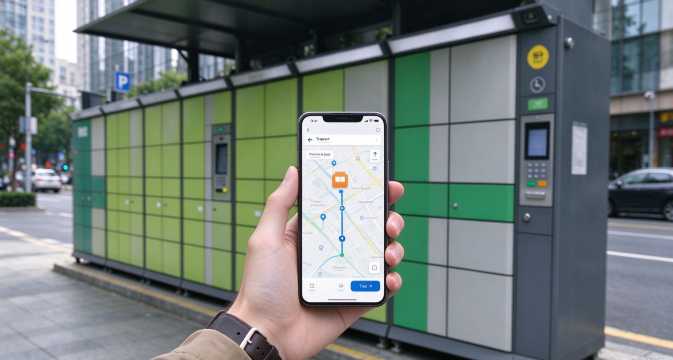
Courier Tracking Apps
Tracking is easy once you know the apps. Set it up before your parcel ships, so you can follow every step toward the hotel:
- SF Express (顺丰) — its own app for shipments sent with SF.
- Cainiao (菜鸟) — aggregates many different couriers in one place.
- Taobao and JD.com — tracking built straight into the shopping app.
If It Goes to a Smart Locker or Cainiao Station
Couriers sometimes leave parcels at a nearby Cainiao station (菜鸟驿站) or an automated smart locker instead of the front desk — usually when no one is free to sign. You'll get a notification with a pickup code; take it and your phone to the station, scan or enter it, and collect the parcel. It's usually a short walk, and the front desk can point you to the nearest one. If the code expires, the station will normally hold the parcel for a few more days before returning it.
Hotel Receiving vs. Other Delivery Options
Hotel receiving isn't the only route, and sometimes another option suits better:
Option | Best when |
|---|---|
Hotel front desk | You're staying put and want it delivered to you |
Cainiao station / locker | You're moving around, or the hotel won't hold parcels |
Mall service centre | You're on a shopping trip |
Airport or station locker | You're passing through and need it en route |
Why Package Receiving Is So Advanced in China
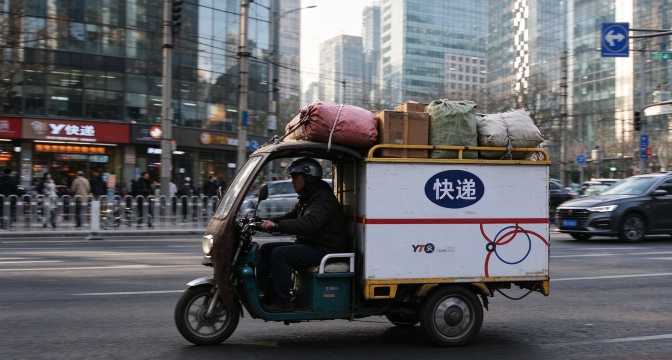
China's e-commerce market is the world's largest, built by Alibaba (Taobao and Tmall) and JD.com. It grew alongside a logistics network in which same-day and next-day delivery are ordinary in major cities, and where couriers move enormous volumes of parcels every day. Delivery apps, courier stations, and smart lockers are woven into daily life rather than bolted on.
With so many people ordering so often, parcel handling became a normal part of daily life — and hotels adapted to it the way they adapted to Wi-Fi and breakfast. What looks like a special service to a visitor is, in China, simply infrastructure. The result is a system so routine that a hotel receiving your parcel barely warrants a second thought.
Top Tips for a Smooth Experience
A quick checklist before you rely on this:
- Confirm the policy before you book, and ask about storage limits and any handling fees while you're at it.
- Format the address in Chinese characters, and save the hotel's Chinese name and address in your phone so you can paste it anywhere.
- Tell the front desk what's coming, and ask them to text or call you if a parcel arrives while you're out.
- Track the parcel in the courier's app, and leave a few days' buffer between ordering and checkout.
- Collect it promptly — don't test the storage limit — and photograph the parcel in case of a later dispute.
- Keep orders modest in size and value to avoid refusals.
For a Canadian traveller, that's the takeaway: a service we might consider unusual is, in China, simply how things work. Understand it before you fly, plan your orders around it, and your parcels will be waiting at the front desk instead of weighing down your suitcase.
[10% Off] China Hotel Recommendations
Shanghai
Beijing
Chengdu
Shenzhen
See All Hotels




























FAQs About Hotel Package Receiving in China
-
Can Canadian travellers have packages delivered to a hotel in Mainland China?
-
How long will a hotel in China hold a package for me?
-
Do hotels in Mainland China charge a fee for receiving packages?
-
What courier companies deliver to hotels in Mainland China?
-
What happens if my package arrives at the hotel before I check in?
Disclaimer: This article has been provided by an individual contributor or third party platform. If there is any discrepancy regarding the copyright, please contact us directly and we will delete the content immediately.
Popular Searches
-
Popular Attractions
-
eSIM/SIM card