China Train Food: Dining Car, Trolley & Station Tips

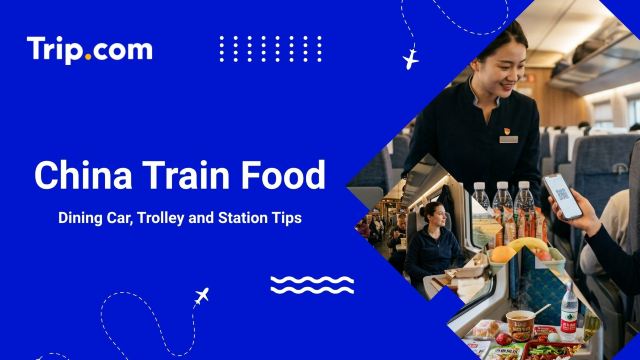
I used to treat train food in China as an afterthought: bottled water, a pack of biscuits, and a quiet hope that the ride would be short. A long high-speed trip changed that. The dining car was warm and busy, the trolley had hot tea and boxed meals, and the station stops offered far better snacks than expected. The food is not gourmet, but it is part of the journey. Once you know where to look, eating well on a Chinese train is easier than it looks.
Top Destination
| Train Route | Duration | Book Online |
|---|---|---|
| Hong Kong to Guangzhou | 47m | Book Ticket |
| Hong Kong to Shenzhen | 14m | Book Ticket |
| Guangzhou to Shenzhen | 29m | Book Ticket |
| Shanghai to Hangzhou | 39m | Book Ticket |
| Shanghai to Suzhou | 23m | Book Ticket |
| Chengdu to Chongqing | 1h 2m | Book Ticket |
| Shanghai to Nanjing | 1h 38m | Book Ticket |
| Beijing to Tianjin | 1h 2m | Book Ticket |
| Wuhan to Changsha | 1h 11m | Book Ticket |
Scroll to see more routes...
Top Destination
| Train Route | Duration | Book Online |
|---|---|---|
| Beijing to Shanghai | 4h 18m | Book Ticket |
| Beijing to Xi'an | 4h 10m | Book Ticket |
| Hong Kong to Beijing | 8h 10m | Book Ticket |
| Hong Kong to Shanghai | 8h 6m | Book Ticket |
| Beijing to Guangzhou | 7h 17m | Book Ticket |
| Beijing to Chengdu | 7h 30m | Book Ticket |
| Shanghai to Chengdu | 11h 11m | Book Ticket |
| Beijing to Harbin | 4h 47m | Book Ticket |
| Beijing to Kunming | 10h 55m | Book Ticket |
Scroll to see more routes...

Why China Train Food Has Its Own Rhythm
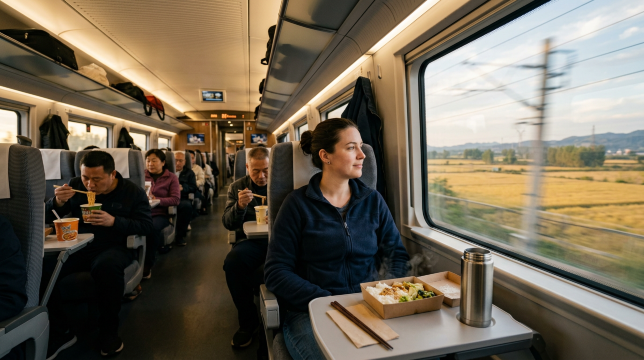
A Chinese train journey has a rhythm, and food is part of it. At meal times the carriage fills with the smell of tea, instant noodles, and something braised in a paper box. I like that ritual. It makes a long ride feel less like waiting and more like a small slice of daily life.
What Makes It Different
The range is wider than what most Canadian travellers are used to: a dining car, a trolley, seat-side QR codes, station restaurants, and delivery from station vendors to your seat. The quality varies, but the options do not.
The Options at a Glance
Option | Best for | Watch out for |
|---|---|---|
Dining car | A hot sit-down meal | Limited seats; go early |
Trolley | Snacks, drinks, boxed meals | Sells out; limited choice |
Seat QR code | Ordering without leaving your seat | Not on every train; often Chinese-only |
12306 station delivery | Local chain meals at major stops | Must order ahead; not every station |
Station shops | Fresh bread, fruit, local snacks | Allow time; prices are higher |
Bringing your own | Control, dietary needs, budget | No strong smells; pack tidy |
I use a mix of these. On shorter hops, the dining car is easy to skip in favour of a small picnic at the station. On a five-hour ride, it becomes part of the plan. The right choice depends less on hunger than on how much time you want to spend in your seat.
China Train Food in the Dining Car
The dining car is my first stop on any long ride. It is not a restaurant in the romantic sense, but it is a proper room with tables, tea, and a reason to stretch your legs. On a busy train, that counts for a lot.
I find it closer to a cramped neighbourhood restaurant than a canteen: laminated menus, a queue at the counter, and a pot of tea that keeps getting refilled. It is not quiet, but it is a good place to talk to other travellers.
How to Find It and When to Go
The dining car usually sits near the middle of the train.
- On an eight-car set it is often car 5; on a longer train it may be car 9, but configurations vary.
- Ask a conductor or walk toward the middle.
- Lunch and dinner are peak times, so I go early.
- Popular meals run out, and the seats fill fast.
What to Order
Menus are often in Chinese, but many have photos.
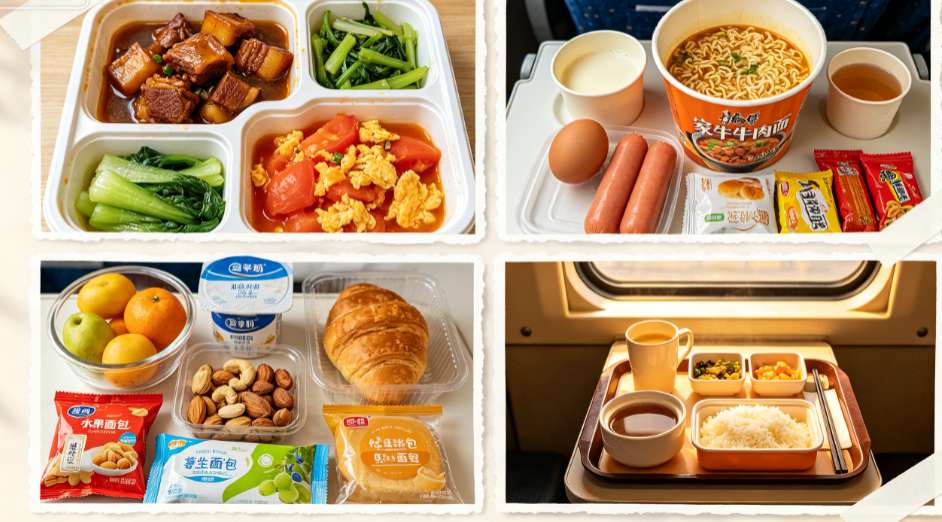
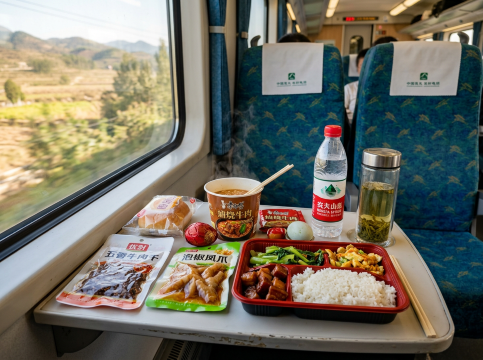
- Look for a boxed meal with rice, vegetables, and a braised meat or tofu dish, then add tea or water.
- If the menu is a blur, point at a photo and ask for the set with rice and vegetables.
- Ask for a receipt, mostly to check the price.
- On older trains, the kitchen may cook proper stir-fries.
- On high-speed trains, expect reheated boxed meals and simple snacks.
- Prices are higher than street food—think casual restaurant prices, not luxury—and business class often includes a meal on longer routes. Do not assume that in second class.
China Train Food: Trolley and QR Codes
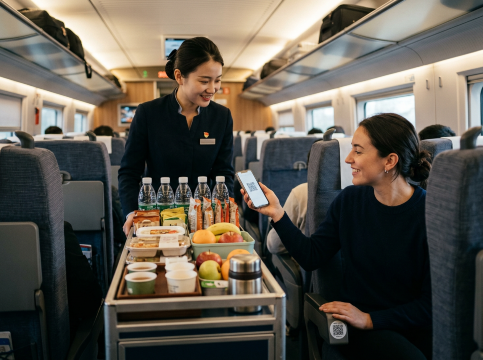
The trolley is the easiest option. It comes to you, which matters when the train is full and your bag is wedged under the seat. I usually stay put for the first hour, then do a lap to see what the trolley has and whether the dining car is open.
The Trolley
The cart usually carries water, tea, coffee, biscuits, fruit, and boxed meals.
- Selection shrinks as the trip goes on, and prices are not bargain-bin, but it is reliable.
- Keep small notes and a phone ready; mobile payment is common, but cash is still legal tender.
- The trolley is also a good place to ask what is local; staff may point to a boxed specialty from the region.
Seat QR Codes
Some high-speed trains have a QR code at the seat.
- Scan it with WeChat or Alipay and you may be able to order snacks or a boxed meal without walking to the dining car.
- The catch is that the interface is often Chinese-first, and not every train has the service.
- If the code opens a menu with photos, tap something simple and pay.
- If it opens a wall of text, fall back to the trolley.
The Hot Water Ritual
Every carriage has a boiling-water dispenser, usually near the end.
- This is where instant noodles, tea, and cup soups happen.
- A small thermos or sturdy cup is useful, and the tap deserves care.
- Strong-smelling food is not welcome in a sealed carriage, so skip durian, stinky tofu, and anything that announces itself from three rows away.
- Instant noodles are allowed, but the smell lingers; eat them early and keep the lid closed.
Stay Connected With Trip.com!
See all attractions
 975856 booked





Ordering China Train Food via 12306
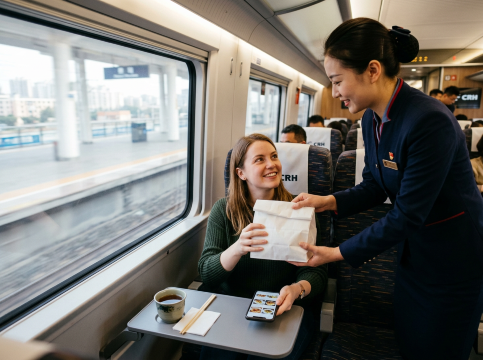
The 12306 app is China's official railway platform. It is useful for tickets, and at selected stations it can also arrange food delivery to your seat on high-speed trains. The service feels a bit like ordering takeout, except the courier hands the bag to train staff at a station stop.
How It Works
You enter your train number and travel date, choose an upcoming station with a restaurant you want, pick the food, and pay.
- Setup is the fiddly part: set up the app before the trip, link a payment method, and save your passport details.
- At the station, check that the restaurant is actually at a stop where the train waits long enough for the handoff.
- The order is delivered to your seat at that stop.
- Order well ahead—often at least an hour, sometimes two—and check the app's cutoff time.
- There is usually a small delivery fee. The app is often Chinese-first, and payment generally runs through Alipay or WeChat Pay, so a foreign card needs to be linked to one of those wallets first.
What Works and What Doesn't
This works best at major stations with a good choice of restaurants.
- It is not available on every route, and short trips may not have an eligible stop. (*I would not build my whole lunch plan around it.)
- Use it when the route and timing line up, and keep snacks as a backup.
- If the app defeats you, hotel staff or a Chinese-speaking friend can often help place the order.
Shanghai
Beijing
Chengdu
Shenzhen
See all flights


China Train Food at the Station
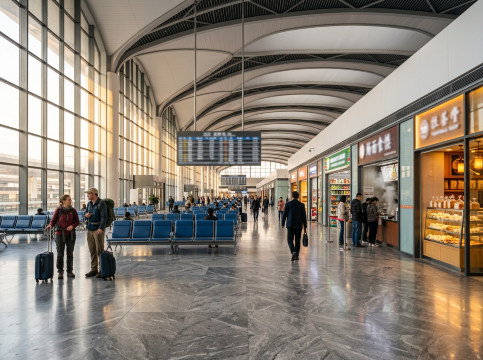
Some of the best train food in China is not on the train at all. It is in the station, before security, or in the food court inside the waiting hall. The trick is to shop with the train in mind. A bowl of soup is a bad idea in a reclining seat; a bag of baozi, a banana, and a bottle of tea are easy. Check the departure board before buying, so you are not queuing when boarding starts.
Best Station Buys
Look for baozi, tea eggs, fruit, bread, yogurt, and sealed snacks.
- In bigger stations, there are noodle shops, dumpling counters, convenience stores, and local specialties.
- A container of hot noodles is awkward on a train, but a boxed rice dish or a bag of baozi travels well.
- Avoid anything that needs a knife, a lot of space, or an open flame.
Timing, Security, and Short Stops
Food and drinks go through security without much trouble, but liquids may be checked.
- Buy after security when possible, so you are not carrying a heavy bag through the queue.
- Arrive with enough time to eat and board without rushing.
- Many high-speed stops last only a few minutes. Do not get off to shop.
- Platform vendors can be tempting, but the train will not wait.
Hop on Amazing Tours in China!
Shanghai
Beijing
Chengdu
Guangzhu
Xi'an
See all attractions






























Regional China Train Food and Dietary Tips
Train food improves when you treat the route as a menu. A station in Xi'an is a chance for roujiamo; Wuhan means hot dry noodles; Guangzhou opens the door to dim sum. You will not get a full regional feast on board, but a station food court or a supermarket near the exit can be much better than a reheated tray. There is no need to chase a region's most famous dish at a station. Look for something that travels well and is likely to be fresh: dumplings, noodles, roast meat in a box, or fruit from a busy shop.
Regional Specialties Worth Planning Around
- Xi'an: roujiamo and cold noodles, easy to pack.
- Wuhan: hot dry noodles, best eaten at the station.
- Guangzhou: dim sum or a boxed rice dish from a station shop.
- Chengdu: dan dan noodles or dumplings, if you have time.
- Beijing: baozi, roast duck wraps, or a simple boxed lunch.
- Shanghai: xiaolongbao only if you can sit down; otherwise, bakery goods and fruit.
Vegetarian, Halal, and Allergy Tips
Vegetarian food exists, but it is not always obvious.
- Look for tofu, greens, rice, fruit, bread, and plain noodles, and ask for no meat broth when possible.
- Halal travellers should look for 清真 signs; major stations often have a halal counter or nearby restaurant, but not every small station does.
- For allergies, carry a Chinese-language card and avoid unknown sauces.
- Cross-contact is hard to rule out in a busy station kitchen, so keep safe snacks in your bag.
My Practical China Train Food Playbook
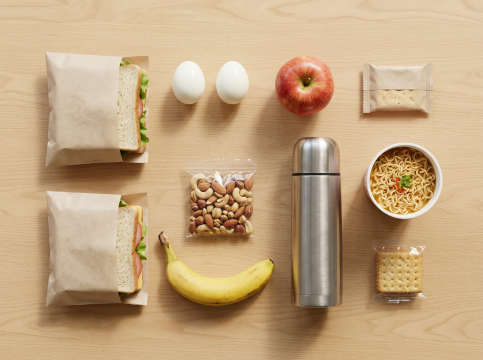
There is no need to expect a great meal on every train. I plan for one good station meal, one hot backup, and enough snacks to cover a delay. That is usually enough. Build in a buffer: trains run late, station food courts get crowded, and the meal you were counting on may be sold out. A box of biscuits is not a tragedy if you have a proper meal planned for the next stop.
What I Pack
- A small thermos or sturdy cup for tea and hot water.
- Instant noodles or a cup soup for long rides.
- Fruit, baozi, bread, and sealed snacks.
- Wet wipes, a small trash bag, and a bottle opener.
- A translation app and a payment app already set up.
- A Chinese allergy card if needed.
A Final Word
China train food is not a culinary destination in itself, but it is a useful window into how the country travels. I like the dining car for the ritual, the station shops for the variety, and the hot-water tap for the sheer practicality of it. With a little planning, a long ride becomes part of the trip rather than a gap between two places.
[10% Off] China Hotel Recommendations
Shanghai
Beijing
Chengdu
Guangzhu
Xi'an
See All Hotels














FAQs About China Train Food
-
How do you order food while on a train in China?
-
What food is served on Chinese trains?
-
Does China have food delivery to train seats?
Disclaimer: This article has been provided by an individual contributor or third party platform. If there is any discrepancy regarding the copyright, please contact us directly and we will delete the content immediately.
Trending Searches
-
More about China Trains
- China High Speed Train Seat Map
- 1st class vs 2nd class on China high speed trains
- Shenzhen to Hong Kong
- Trip.com Train Discount Codes
- China Train Luggage
- How to Take a Train in China
- China Train Types
- China Train Seats Together
- China Sleeper Train
- China Train App
- What To Do If China Train Tickets Are Sold Out
- Chongqing Train Stations
- macau casino
- Trains to Ercolano Scavi
- Trains to Swansea
- Xativa to Cartagena trains
- Trains to Reading
- China Train
- Best Places to Visit in February
- Zaragoza Portillo to Zaragoza-Delicias trains