China Customs Prohibited Items: What Not to Bring

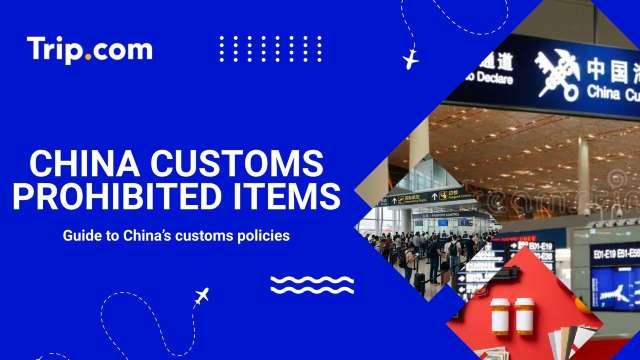
If you’re a Canadian traveller preparing for a trip to China, understanding local customs rules is essential for a smooth visit. Many tourists encounter unexpected delays, item confiscation, fines, or even legal issues simply from unknowingly violating China’s import and export regulations.
To help you avoid these travel hiccups, I’ve compiled a complete, traveller-friendly guide to China’s customs policies. The core rule you need to remember: all luggage must be for personal use only in reasonable quantities, with no commercial goods included. I’ll cover the two customs clearance channels, baggage declaration rules, prohibited and restricted items, and step-by-step clearance procedures tailored specifically for Canadian visitors.
NEW ENTRY-EXIT RULESSeptember 15, 2026 Update: China implements tighter State Council entry-exit controls focusing on strict data truthfulness.
CRITICAL WARNING FOR FOREIGNERS:
• Submitting false documents or verbal statements triggers a 1 to 5-year entry ban.
• Officers may verify electronic data/bookings, but there are no mandatory blanket phone searches for general tourists.
• Mandatory registration is enforced for visa/immigration intermediaries.
• Host entities issuing false invitations face fines up to RMB 50,000.
CRITICAL WARNING FOR FOREIGNERS:
• Submitting false documents or verbal statements triggers a 1 to 5-year entry ban.
• Officers may verify electronic data/bookings, but there are no mandatory blanket phone searches for general tourists.
• Mandatory registration is enforced for visa/immigration intermediaries.
• Host entities issuing false invitations face fines up to RMB 50,000.
VISA-FREE EXPANSIONAugust 20, 2026 Update: China expanded visa-free entry to Kyrgyzstan and Vietnam. The 240-hour visa-free transit now covers 57 countries, and Hainan 30-day visa-free entry covers 61 countries.
Policy Clarification: All existing 240-hour and 30-day visa-free transit policies remain VALID for eligible travellers with verified itineraries.
Policy Clarification: All existing 240-hour and 30-day visa-free transit policies remain VALID for eligible travellers with verified itineraries.
To Shanghai
To Beijing
To Chongqing
See all flights


China Customs Channels: Green vs. Red
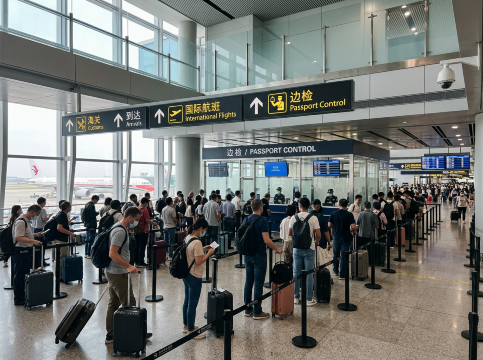
China’s entry and exit ports offer two customs clearance channels with clear usage rules. The differences, applicable scenarios and requirements are sorted in the table below:
Customs Channel | Applicable Scenarios | Core Rules & Notes |
|---|---|---|
Green Channel (Nothing to Declare) | Travellers carrying no dutiable, restricted, or prohibited items; only daily personal belongings including clothes, toiletries, small amounts of cash, and personal travel electronics. | Allows fast, streamlined customs clearance for ordinary tourist luggage with no declaration required. |
Red Channel (Goods to Declare) | Mandatory for travellers carrying dutiable goods, excess cash, live animals/plants, commercial goods, product samples, or any restricted/prohibited items. | Honest declaration via the Red Channel is required in all applicable cases. It is also the safest option if you are unsure about your belongings to avoid customs penalties. |
How to Complete the China Customs Baggage Declaration Form
Filling out the China Customs Baggage Declaration Form is quick and straightforward. You can even prepare it ahead of your trip to save airport time. The complete process and key rules are organized into step-by-step guidelines below:
- Pre-trip preparation: The official declaration form is available for free download in PDF format online. You can pre-fill basic information before departing Canada to avoid last-minute delays.
- On-site form access: If you do not pre-prepare the form, physical blank copies are fully available at customs counters and service desks at all Chinese entry ports.
- Fill out & verify information: Accurately complete your personal details, travel information, and a full list of all restricted/dutiable items you are carrying. Double-check all entries to avoid declaration errors.
- Submit for official endorsement: Hand over the completed form to customs officers for inspection, review, and official endorsement.
- Keep the endorsed form safely (critical rule): Retain your stamped and verified declaration form. If you bring declared items that you will take back out of China, you must resubmit this form during outbound clearance. Losing the form may lead to unexpected duty charges on your originally imported personal items.
Stay Connected With Trip.com!
See all attractions
 939346 booked




China Customs Prohibited Items: What You Absolutely Cannot Bring Into China

This is the most critical section for us Canadian travellers. China has strict, zero-tolerance rules for prohibited import items, with no exceptions for accidental or unknowing possession. All banned items fall into clear categories, and violating these rules can lead to item confiscation, fines, and even criminal liability in severe cases.
Weapons, Explosives & Counterfeit Currency
All related weapons, explosives, counterfeit currency and securities are strictly prohibited from entering China with zero exceptions. The full banned scope is listed below:
- Weapons & Explosives: Real firearms, bullets, fireworks, explosives, and all imitation weapons/toy guns that resemble real firearms. No such items are allowed to be carried for any purpose.
- Counterfeit Financial Items: Forged currency of any nationality and denomination, as well as all fake securities. Carrying these items constitutes both a customs violation and a serious legal offense in China.
Narcotics, Psychotropic Substances & Deadly Poisons
China enforces an extremely strict zero-tolerance ban on all narcotic drugs, psychotropic substances, and deadly poisons for incoming travellers. All prohibited items and legal consequences are listed below:
- Narcotic drugs
- Psychotropic substances: Covers all natural and synthetic psychotropic drugs regulated by Chinese law.
- Deadly poisons: All highly toxic lethal substances are fully prohibited from entering.
- Legal consequence: Carrying any of the above items will result in formal criminal prosecution, not just routine customs fines, applicable to all foreign travellers including Canadians with no exceptions.
Politically Sensitive & Harmful Printed or Digital Materials
All printed and digital content that harms China’s national interests is strictly prohibited from import. The banned content types and penalty rules are as follows:
- Prohibited media forms: Books, magazines, photos, films, audio/video recordings, and all digital files stored on phones, laptops, USB drives, and other portable devices.
- Prohibited content types: Materials involving political sensitivity, violence, obscenity, terrorism, and any content that may damage China’s political, economic, cultural, moral, or public order interests.
- Penalty rules: Non-compliant materials will be seized by customs immediately. Serious violations will lead to additional legal action.
Animals, Plants, Biological Products & Food From Epidemic Zones
To protect China’s agricultural safety and public health, cross-border quarantine restrictions apply strictly to biological, animal, plant and food items. All prohibited entry items are sorted below:
- Live organisms & planting materials: Unauthorized live animals, fresh plants, plant seeds, and unprocessed agricultural products.
- Hazardous biological items: Pathogenic microorganisms, invasive pests, and soil of any origin.
- Risk food & medicine: All animal products, plant products, food, and medicines sourced from global epidemic-stricken regions.
- Regulation purpose: These strict bans prevent the cross-border spread of infectious diseases and invasive pests, protecting domestic public health and agricultural security.
China Customs Export Banned Items
As Canadian travellers, we need to master both import and export prohibitions for China. All items banned for import are also banned for export. Beyond that, China enforces additional strict export restrictions on sensitive national cultural relics, ecological species and state confidential items to protect national security and cultural heritage.
Export Prohibited & Restricted Items Rules
In addition to all goods banned for import (which are also prohibited for export), China enforces extra strict outbound restrictions on cultural, ecological, precious and state confidential items. All core export regulations are sorted into the unified table below for Canadian travellers’ quick reference:
Export Item Category | Specific Rules & Restrictions | Penalty & Requirements |
|---|---|---|
Cultural Relics & Antiques | All state-level protected cultural relics are strictly banned from export. Ordinary non-protected antiques are allowed for outbound transport. | Eligible antiques require official export certification and complete customs declaration. Undeclared cultural relics will be immediately seized by customs. |
Endangered Fauna & Flora | All rare/endangered Chinese animals and plants, including their specimens, seeds and reproductive materials, are fully prohibited from export (compliant with CITES international conventions). | Violations incur severe legal penalties and criminal liability. |
Gold & Silver Precious Metals | No export restriction for weight ≤ 50g; mandatory customs declaration required for gold/silver exceeding 50g. | Failure to declare excess weight metals will result in inspection, detention or penalty. |
State Secret Materials | All manuscripts, data, videos and digital media containing Chinese state secrets are absolutely banned from outbound transport. | Violations constitute serious legal offenses with severe punitive consequences. |
What You May Not Take Home as a Souvenir
When leaving China, many common souvenir and personal items fall under export restrictions (not full bans) and require mandatory declaration and official documentation. The main restricted export items include:
- Precious metals exceeding the declared weight limit
- RMB and foreign cash exceeding the legal carrying quota
- Financial securities and negotiable instruments
- Radio devices and communication equipment
- Cultural relics and antiques (only permitted with valid official export permits)
- High-value Chinese herbal medicines and traditional remedies
To avoid issues, you must truthfully declare these restricted items at the Red Channel and provide all required permits and certification documents for customs verification before export.
Conditionally Restricted Import Goods & Clearance Rules
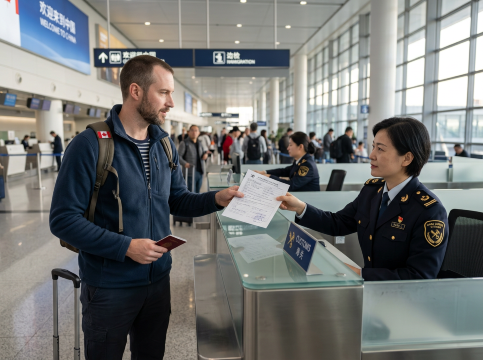
Many Canadian travellers confuse prohibited goods with restricted goods. The key difference is simple: prohibited items are completely banned, while restricted items are allowed entry under specific conditions (declaration, quantity limits, official permits, or inspections). Below is a complete consolidated table of common restricted import items and their official rules for Canadian travellers.
Restricted Item Category | Official Duty-Free / Carrying Limit | Customs Clearance Rules & Notes |
|---|---|---|
Tobacco & Alcohol | Alcohol (≥12% ABV): 1,500mlTobacco (choose one): 400 cigarettes / 100 cigars / 500g loose tobacco | Excess quantities incur official customs duties. Large excess amounts or items suspected for commercial resale may be confiscated by customs. |
Foreign Cash | No declaration required ≤ USD 5,000Mandatory declaration > USD 5,000 | Outbound cash release is strictly based on your inbound declaration record. Apply for a duplicate declaration form if you need to re-export excess foreign currency. |
RMB Cash | Inbound & outbound hard limit: 20,000 RMB per person | No exceptions for personal travel. Any amount exceeding the cap is not permitted for cross-border carriage. |
Gold & Silver Precious Metals | No declaration required ≤ 50gMandatory declaration > 50g | All gold and silver products exceeding the weight limit must be declared on the baggage declaration form upon entry. |
Radio & Communication Equipment | No personal exemption | Includes transmitters, receivers, satellite phones, and encrypted communication devices. Must declare in advance and apply for official Chinese usage permits. Undeclared equipment will be detained. |
Medications, Health Products & Herbal Medicine Rules
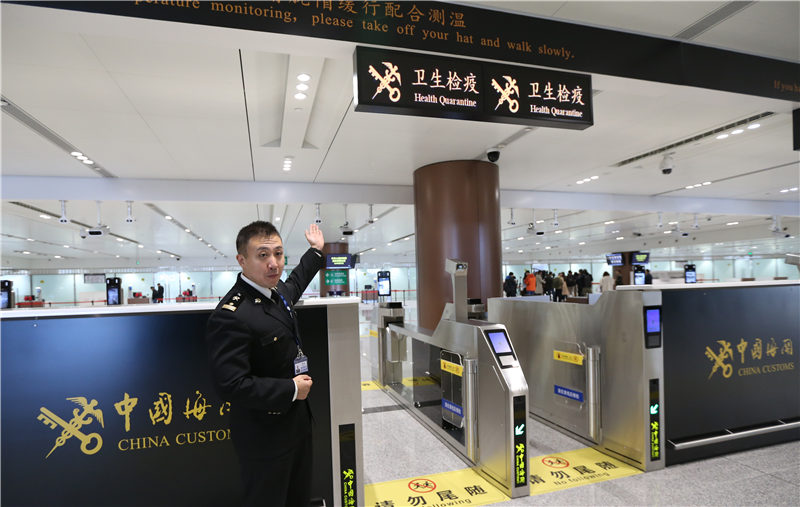
Medication rules are one of our biggest travel concerns, and for good reason—many Canadian travellers make innocent mistakes with prescription drugs and health supplements. Let’s break down the clear, official rules for personal medications and Chinese herbal medicines for inbound and outbound travel.
Prescription Medications: Rules & Documentation
Short-term foreign tourists (including Canadians) can carry prescription medications for personal use only, with a maximum 7-day supply without special official documentation. This is the safest, most hassle-free quantity for casual travel.
If you need to carry more than a 7-day supply, you must declare the medications as formal cargo and prepare the following valid supporting documents. Customs will retain photocopies of these files for verification:
- A formal written medical certificate issued by your doctor
- Your original valid prescription
Note: All narcotic and psychotropic prescription drugs fall under prohibited items, even if prescribed by a Canadian doctor, and cannot be brought into China.
Chinese Herbal Medicines & Traditional Remedies Export Rules
If you plan to purchase Chinese herbal medicines and traditional remedies to bring back to Canada, strict export limits and bans apply. All key rules are organized in the list below for quick reference:
- Carry-on Value Limits: 300 RMB per person for overseas destinations (Canada included); 150 RMB per person for Hong Kong and Macao. Mailed herbal medicines follow separate official quantity limits.
- Strictly Export-Prohibited Traditional Medicines: Musk, toad venom, tiger bone, rhinoceros horn, and bezoar. These items are completely banned from outbound transport with no exceptions.
- Special Exception: Common over-the-counter Chinese patent medicines containing only trace amounts of musk are permitted for personal carry out of China.
Amazing Tours in China!
Shanghai Tours
Beijing Tours
Chongqing Tours
See all attractions



![Half-Day Tour to Zhujiajiao Ancient Town [Explore the Millennial Water Town with Timeless Charm and Lively Atmosphere]](https://ak-d.tripcdn.com/images/0352m12000pbrd487A4C6_C_568_320.jpg)














![[Can include boat tour for groups of up to 8 people] Chongqing Wulong Natural Three Bridges + Longshuixia Gorge + Wujiang River Day Trip](https://ak-d.tripcdn.com/images/0352912000ll1hsh4F70B_C_568_320.jpg)
![[Guide Included] Chongqing Yangtze River Cableway + Light Rail Through Buildings + Hongyadong + Ciqikou 1-Day Tour](https://ak-d.tripcdn.com/images/0350612000ocen7dg0CA9_C_568_320.jpg)


Food & Agricultural Products Customs Rules
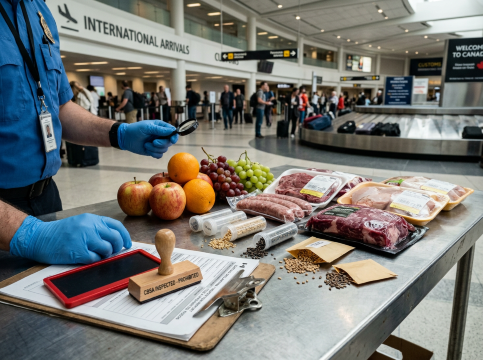
Food and agricultural products are the most common cause of customs violations for Canadian travellers. Many of us pack snacks or local Canadian agricultural products without knowing they are restricted, leading to on-the-spot confiscation.
To help Canadian travellers quickly clarify food and agricultural product entry rules, I have sorted all key regulations into the unified table below, covering prohibited items, dutiable goods and core penalty/charge standards:
Category | Specific Items | Customs Rule & Explanation |
|---|---|---|
Strictly Prohibited Entry Items | Fresh fruits, fresh vegetables, live animals, raw meats, eggs, dairy products (from restricted/epidemic-affected regions), pathogenic microorganisms, pests, soil | Fully banned from entry with zero leniency at all ports. Rules are formulated to prevent cross-border spread of invasive species and infectious diseases, and violating items will be directly confiscated. |
Dutiable Premium Food Items | Fresh/dried abalone, dried sea cucumber, bird’s nest and other high-end seafood | Not prohibited for personal entry. A standard 10% customs duty is charged if the total value exceeds the RMB 1,000 personal-use limit for checked baggage. China Customs issues official per-kilogram reference prices for duty calculation. |
Travelling With Pets to China: Rules & Requirements
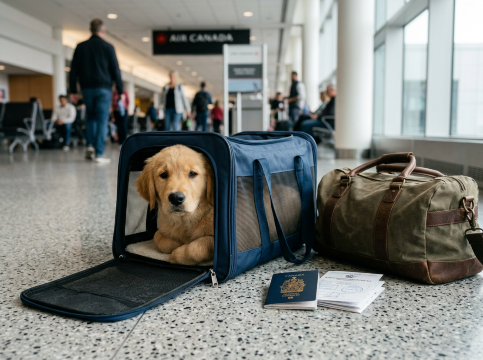
For Canadian travellers hoping to bring a cat or dog to China, there are clear, non-negotiable rules. Each traveller is allowed to bring only one pet (dog or cat) per trip.
You must prepare two core official documents to bring your cat or dog into China legally:
- Official quarantine inspection certificate: Issued by Canadian local authorities, valid for 30 days from the date of issuance.
- Valid rabies vaccination certificate: Complete and up-to-date vaccination proof for your pet.
If your documentation is incomplete, expired, or invalid, port animal and plant quarantine authorities will arrange temporary mandatory quarantine for your pet until all verification procedures are completed.
Step-by-Step China Customs Clearance & Travel Checklists

After learning all the rules, let’s walk through the full actionable customs clearance process for Canadian travellers entering and exiting China, plus practical inbound and outbound checklists for quick reference.
Follow these simple step-by-step procedures for smooth customs clearance when travelling to and from China:
- Pre-trip preparation: Download and preview the official China Customs Baggage Declaration Form online in advance to familiarize yourself with the fields and requirements.
- Fill out the form truthfully: Complete the declaration form accurately upon arrival, avoiding any false or misleading information about your belongings.
- Select the correct customs channel: Check your luggage carefully. Use the Green Channel for personal items only with no goods to declare; use the Red Channel if you carry dutiable, restricted, excess, or regulated items.
- Submit documents for inspection: Hand over your completed declaration form and all supporting certification documents to customs officers.
- Finish clearance procedures: Cooperate with on-site inspections and complete all required customs formalities to officially enter or exit China.
Inbound Customs Checklist (Entering China)
Keep this quick checklist handy for smooth inbound clearance:
- Declare all personal items valued over 2,000 RMB (for non-resident travellers)
- Declare foreign cash exceeding USD 5,000 and all RMB over the 20,000 RMB limit
- Declare all animals, plants, and biological products with valid certification
- Declare all radio and communication equipment
- Prepare full supporting documents for all restricted items
- Use the Red Channel immediately if any declaration items apply
Outbound Customs Checklist (Leaving China)
Follow this checklist for hassle-free outbound clearance back to Canada:
- Declare items valued over 5,000 RMB that you will bring back to China in the future
- Declare all precious metals (over 50g) and purchased antiques/cultural relics
- Confirm all cultural relics have valid official export permits
- Declare cash exceeding USD 5,000 or the 20,000 RMB outbound limit
- Opt for the Red Channel for any restricted or dutiable outbound items
Final Thoughts
As Canadian travellers, a little pre-trip knowledge of China’s customs rules goes a long way. Every regulation is designed to protect public health, ecological security, cultural heritage, and market order. By sticking to the personal-use, reasonable-quantity principle, declaring honestly, and avoiding all prohibited items, we can enjoy a seamless, penalty-free travel experience in China. Whether you’re visiting for tourism, family, or business, these customs guidelines are your most reliable travel companion.
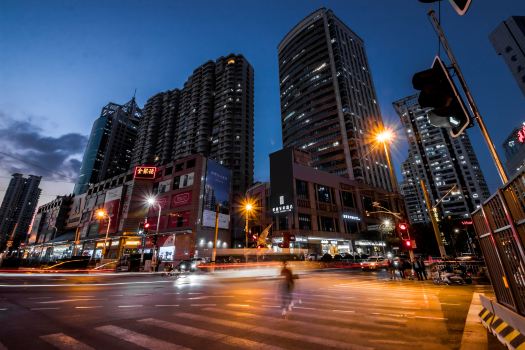
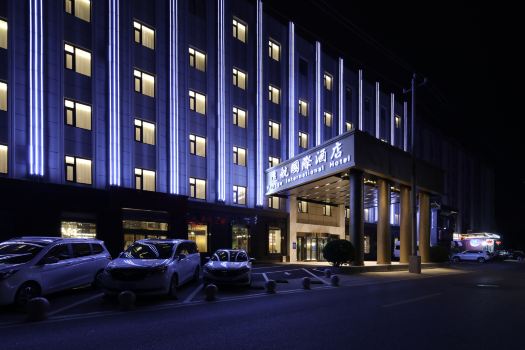
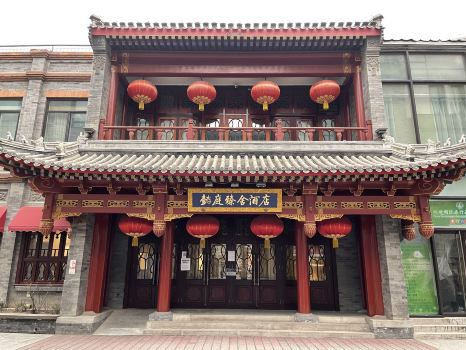
[10% Off] China Hotel Recommendations
Top Shanghai Hotels
Top Beijing Hotels
Top Chongqing Hotels
See All Hotels
























China Customs Prohibited Items FAQs
-
What items cannot be brought into China?
-
What should I not bring when travelling to China?
-
What medication is not allowed in China?
-
Can I bring Canadian food to China as a gift?
Disclaimer: This article has been provided by an individual contributor or third party platform. If there is any discrepancy regarding the copyright, please contact us directly and we will delete the content immediately.
Trending Searches
-
Air travel guide
-
Latest Flight Deals
-
eSIM/SIM card