

This guide tailored for Canadians covers mobile payment apps, RMB cash, international bank cards and ATMs. With easy pre-trip prep, paying in China is simple.


Understanding Chinese Currency: The Renminbi (RMB) and Yuan Explained
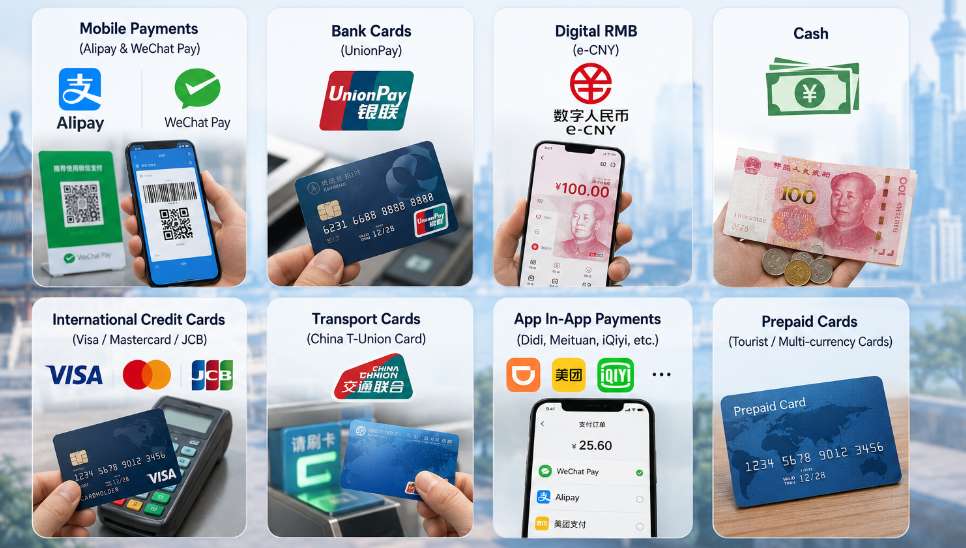
China’s official legal currency is the Renminbi (RMB), while Yuan (¥) is the daily spending unit locals and merchants use — similar to “Canadian Dollar” shortened to “dollar”. The currency unit rule stays unchanged: 1 yuan = 10 jiao = 100 fen. Fen is fully obsolete for daily purchases, and jiao is rarely used, so you will only handle whole yuan during travel. Store prices are marked ¥100 or 100 RMB, with identical value.
Rates fluctuate daily; airport exchange rates are always less favourable than bank branch rates. Key distinction: Renminbi = official currency name, Yuan = daily pricing name; just say “yuan” when exchanging or shopping for easy communication.
CAD to CNY: How to Get the Best Exchange Rate as a Canadian
My top tip for Canadian visitors: Exchange a small amount of yuan before departing Canada to avoid urgent cash needs right after landing. Below is a ranked comparison of all exchange channels:
Exchange Channel | Core Advantages | Key Limitations | Ideal For |
|---|---|---|---|
Major Canadian Banks (RBC, TD, Scotiabank) | Best overall CAD-CNY exchange rate for large transactions; low processing fees; transparent, regulated service | Requires 3-5 business days advance online order for branch pickup; not suitable for last-minute exchanges | Pre-trip large currency exchanges; most reliable option for Canadian travellers |
Canadian Airport Exchange Kiosks | Ultra-convenient, no advance order needed; open for all flight times | Heavily marked-up poor exchange rates; hidden service fees | Emergency tiny last-minute exchanges only |
Chinese International Airport Forex Desks | 24/7 open for arriving international flights; accepts CAD cash and Canadian debit cards | Moderate exchange rates, less favourable than bank branches | Grabbing ¥300-¥500 emergency cash immediately upon arrival in China |
In-Country Bank of China Branches | Best onshore exchange rate in China; fully regulated, safe currency exchange service | Requires physical Canadian passport for exchange; only open during standard weekday business hours | Larger currency exchanges once you’re already in China |
Pre-trip rule: Exchange ¥400 yuan in Canada beforehand to cover airport transit, snacks and convenience store purchases upon arrival.
 3772 booked




![Half-Day Tour to Zhujiajiao Ancient Town [Explore the Millennial Water Town with Timeless Charm and Lively Atmosphere]](https://ak-d.tripcdn.com/images/0352m12000pbrd487A4C6_C_568_320.jpg)






![Beijing Mutianyu Great Wall round-trip bus [departure time slots 7:30 | 8:30 | 9:30 | 12:00 | 15:30 optional multilingual Russian/Spanish + includes shuttle ticket + upgrade to private charter available]](https://ak-d.tripcdn.com/images/0352e12000ccyef751C18_C_568_320.jpg)





![[Can include boat tour for groups of up to 8 people] Chongqing Wulong Natural Three Bridges + Longshuixia Gorge + Wujiang River Day Trip](https://ak-d.tripcdn.com/images/0352912000ll1hsh4F70B_C_568_320.jpg)



![[8-person group tour including Wulong Natural Three Bridges, Longshuixia Gorge, and Wujiang River cruise] Chongqing Wulong Three Natural Bridges, Longshuixia Gorge, and Wujiang River day trip](https://ak-d.tripcdn.com/images/0350l12000rx88gxdF881_C_568_320.jpg)
![Chongqing travel photo shoot [Chongqing visa on arrival (8D mountain city riding + cyberpunk style + motorcycle street photography)]](https://ak-d.tripcdn.com/images/0354w12000s035mzq8F12_C_568_320.jpg)
Payment Methods in China: Full Breakdown for Foreign Visitors
For travellers searching how to pay in China for foreigners and looking for a verified China payment app for foreigners, 2026 official policies greatly lower barriers for Canadian passport holders. China remains one of the world’s most cashless nations, yet foreign visitors have more flexible payment choices than ever.
Four universal payment methods for Canadian tourists:
- Foreign-enabled mobile payment apps (Alipay + WeChat Pay, updated overseas binding rules)
- International credit/debit cards (Visa, Mastercard, UnionPay, limited Amex)
- Physical RMB cash (mandatory backup for rural and small local vendors)
- Mainland ATMs for on-site yuan withdrawals
Mix two payment methods for hassle-free spending across tier-1 cities, rural towns and scenic spots.
Alipay in China: Step-by-Step Setup Guide
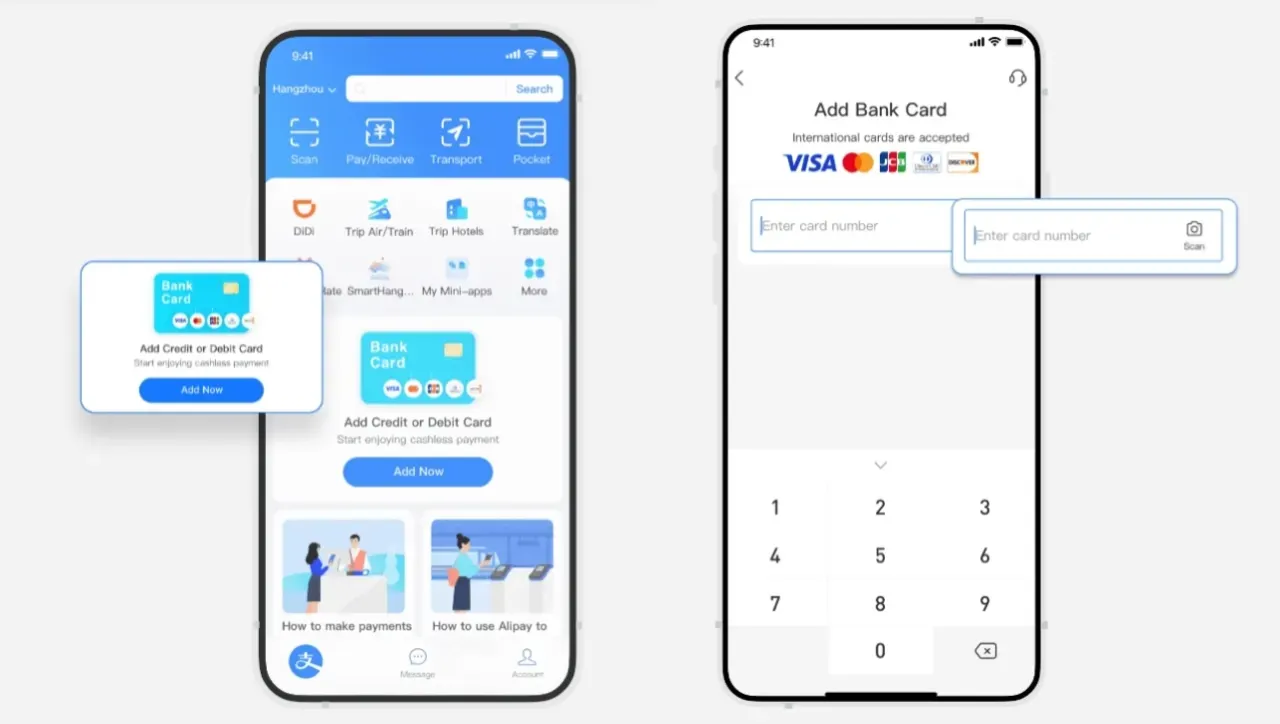
Alipay is the most user-friendly China payment app for foreigners, with upgraded Alipay Travel Wallet (updated Tour Pass) for overseas tourists; no local Chinese bank account required. Step-by-step setup:
- Download Alipay via App Store/Google Play while still in Canada
- Register account with your Canadian mobile number and complete SMS verification
- Activate Alipay Travel Wallet: Bind Canadian Visa/Mastercard debit/credit cards directly; 2026 card approval rate optimized for North American cards
- Pay directly via linked foreign card, or top up wallet balance via bank transfer for fee-free checkout
Payment process: Scan merchant QR code, or let merchants scan your personal payment QR code. Widely accepted at malls, restaurants, high-speed rail stations and mainstream street vendors nationwide.
WeChat Pay in China
WeChat Pay is the top alternative to Alipay, perfect if you use WeChat for messaging, hotel and taxi bookings. 2026 simplified overseas card setup:
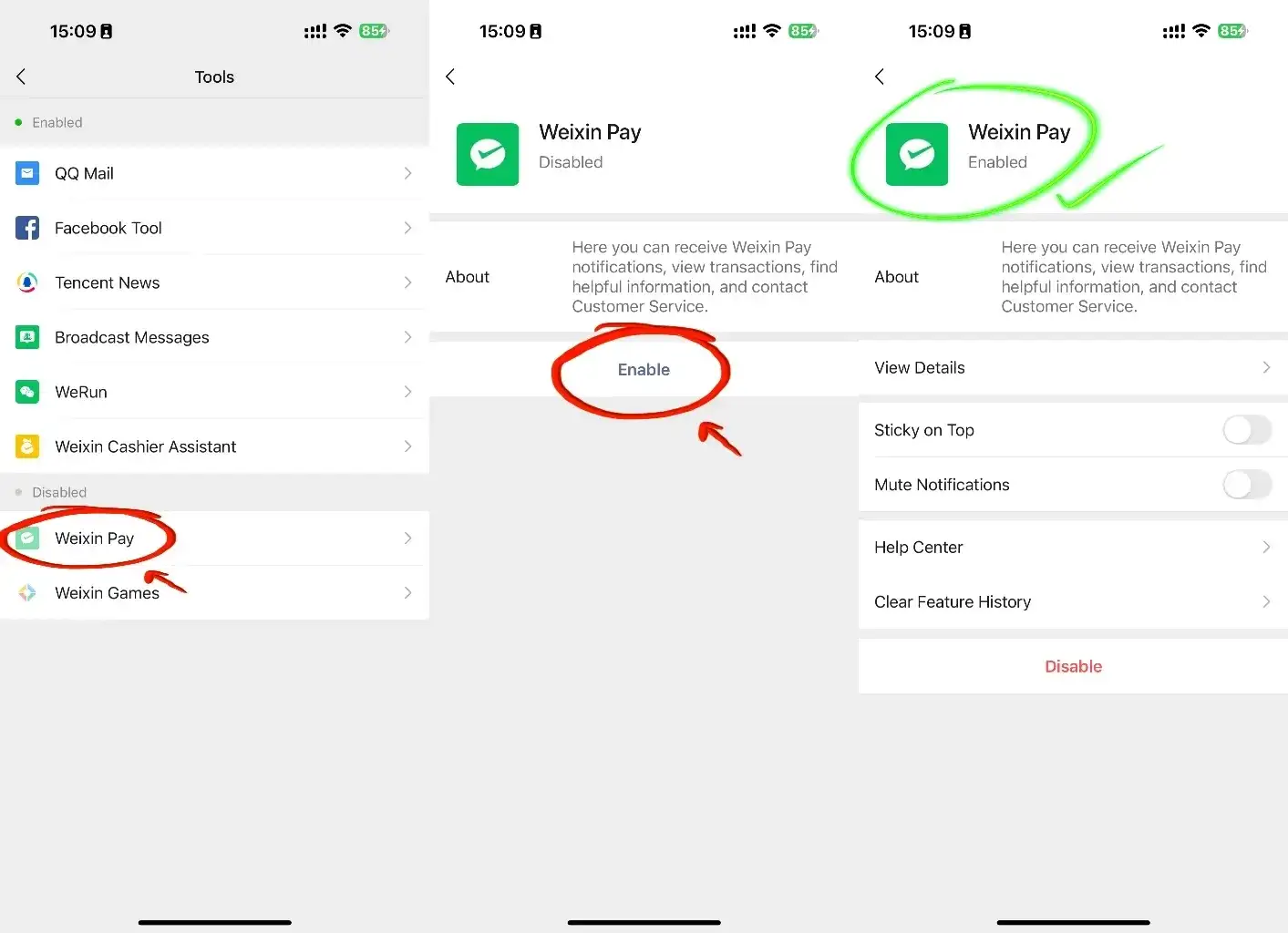
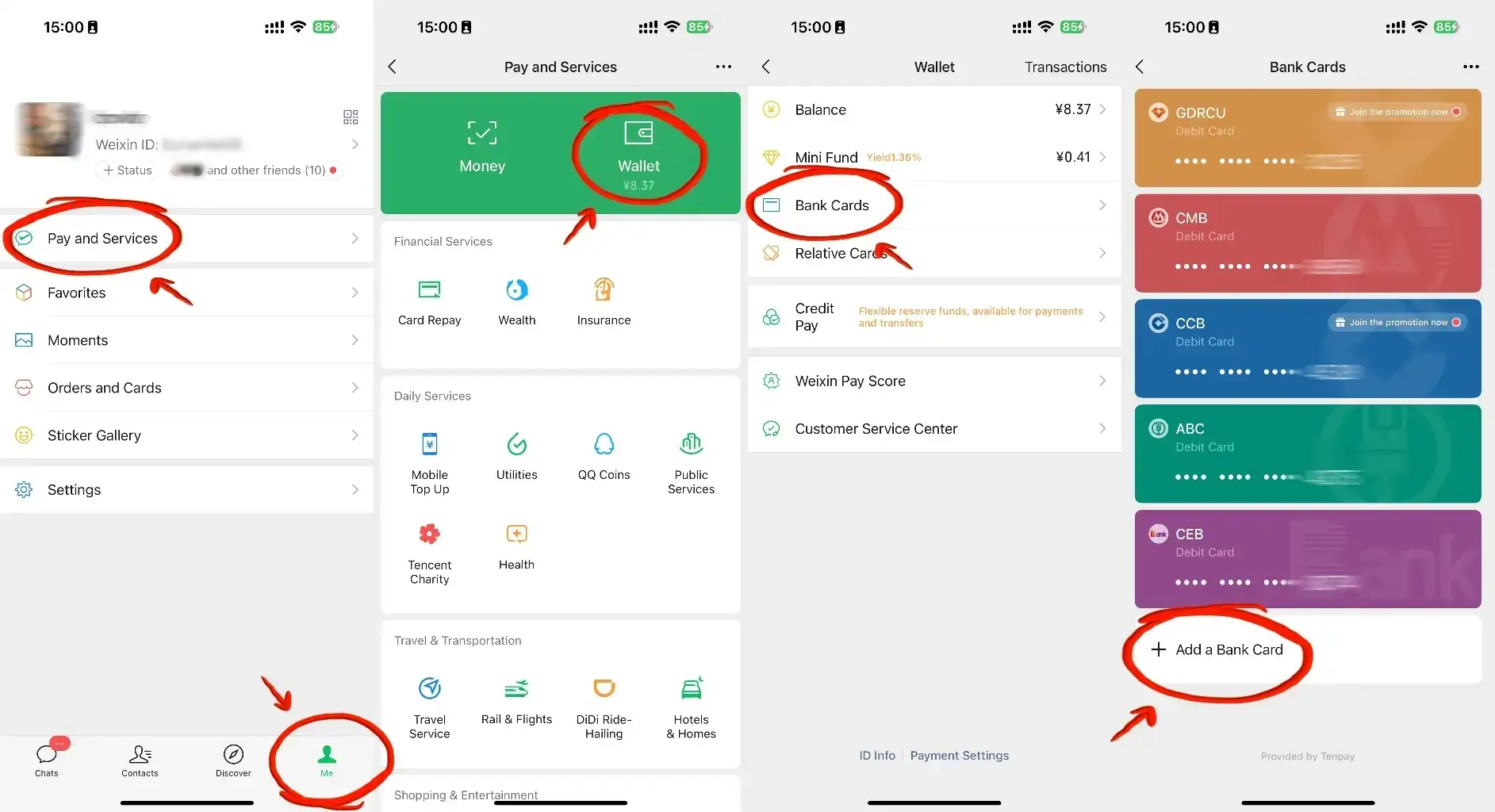
- Download WeChat, complete profile + passport identity verification with your Canadian phone number
- Open WeChat Pay > Overseas Card entry, bind valid Canadian Visa/Mastercard
- Finish one-step card verification, generate personal QR code for in-store payment
App Comparison: Alipay has clearer English menus for short-term tourists. WeChat Pay has higher daily overseas transaction limits. You only need one main app, but keep both as backup for small shops that support only one platform.
How to Avoid the 3% Alipay and WeChat Pay Foreign Card Fee
Top tourist query: How to avoid 3% Alipay fee? Per latest platform rules, both apps charge 3% international service fee for foreign-bound cards on transactions over ¥200. Verified fee-avoidance strategies for Canadians:
- Small transaction exemption: All purchases ≤¥200 are permanently fee-free, covered by platform official subsidies
- WeChat 2026 new user benefit: New foreign card binders get 60 days of fee-free spending (daily limit ¥1000)
- Use zero-foreign-transaction-fee Canadian cards: Scotiabank Passport Visa Infinite, Rogers Red World LEGEND Mastercard are top picks to offset conversion costs
- Prepaid travel card usage: Load KOHO/Wise CAD balance beforehand for lower conversion fees vs 3% app service charge
- Alipay Travel Wallet top-up: Transfer pre-exchanged yuan to wallet balance to skip foreign card fees entirely
Paying With Credit and Debit Cards in China: Latest Acceptance Rules
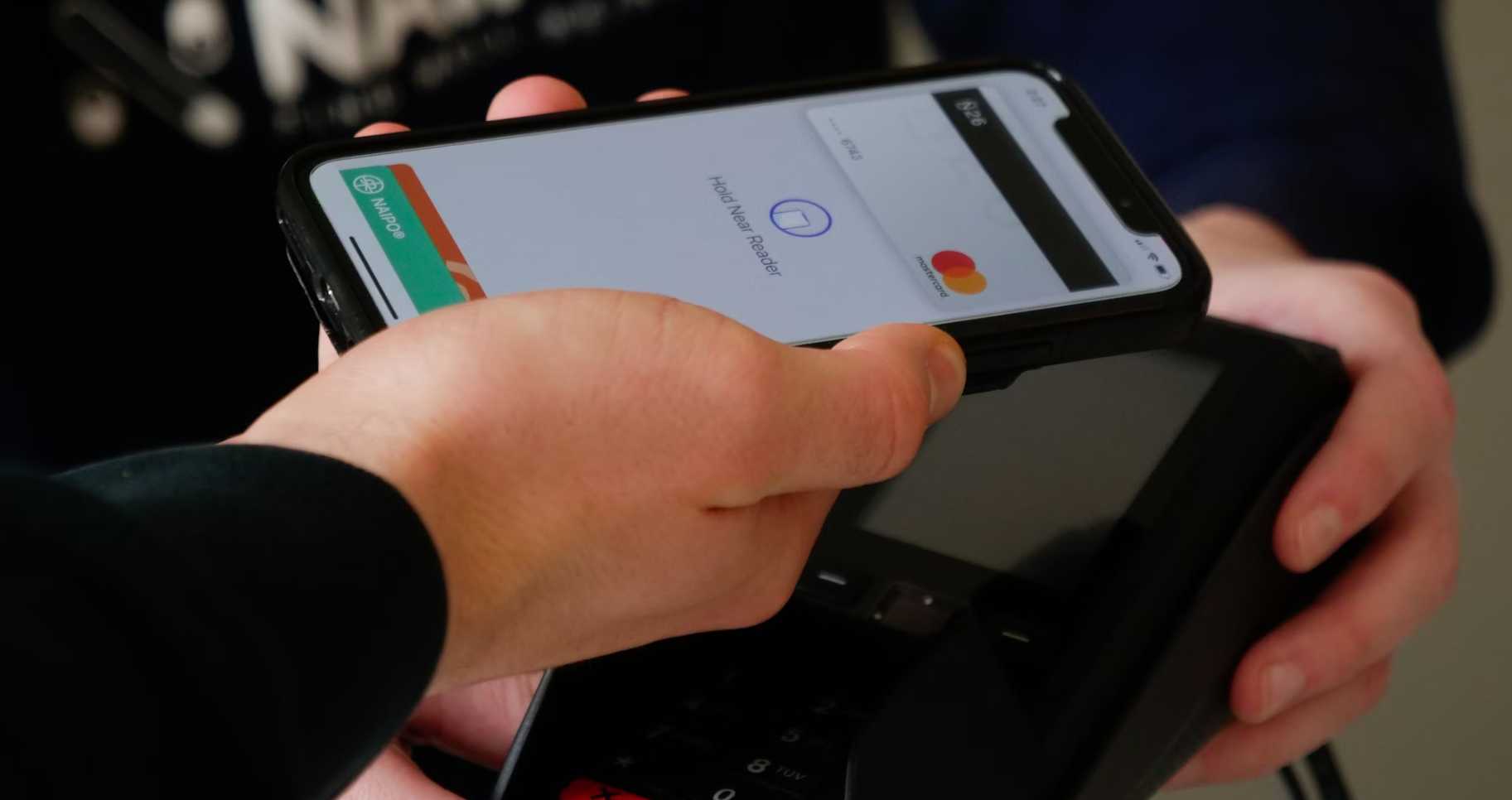
International card acceptance expanded slightly in 2026, with clear usage limits for Canadian bank cards:
- Visa & Mastercard: Accepted at international hotels, downtown tier-1 malls, fine dining in Beijing, Shanghai, Shenzhen; rarely accepted at family restaurants and rural shops
- American Express: Extremely limited acceptance, only luxury downtown international hotels
- UnionPay: Full nationwide acceptance; any Canadian card with UnionPay logo works at shops, ATMs and transit gates
Mandatory pre-trip step: Call RBC, TD, BMO, CIBC or Scotiabank to activate international spending. 2026 upgraded bank fraud monitoring causes random card declines on weekends and Chinese national holidays for unactivated cards.
Cash Payments in China: When You Need It and How to Manage It
Cash is irreplaceable for China travel. You need physical yuan for rural shops, temple ticket booths, street food stalls, family-run small restaurants and local market bargaining. Tipping is optional nationwide, but small cash tips are welcomed for tour guides and hotel staff.
Carry ¥800-¥1200 cash daily as backup. Keep large ¥100/¥50 notes for big payments, small ¥10/¥20 notes for casual small purchases. Mobile data outages often disable mobile payments, so never travel cash-free.
Counterfeit Currency in China
Fake RMB mainly circulates in crowded tourist zones and unregulated street exchange spots. Follow these rules to avoid fake banknotes:
- Check for security features: OVMI-printed denomination numerals, demetalised windowed security threads with colour-shifting effects, intaglio printing, watermarks, and see-through register patterns.
- Reject torn, stamped, faded or written-on notes; merchants and banks refuse damaged notes per 2026 regulations
- Inspect all cash in front of exchange/ATM staff, sign exchange receipts only after confirming authentic notes
- Only exchange currency at official Bank of China branches, airport licensed desks and hotel forex counters
ATMs in China: Withdrawal Guide for Canadians
Bank of China and ICBC ATMs have the highest compatibility with Canadian Visa/Mastercard debit cards. Key caveats:
- Rural town ATMs only support Chinese UnionPay domestic cards; foreign Canadian cards do not work
- Fixed withdrawal cost: $5-$10 CAD flat fee per transaction + bank conversion markup fee
- Daily card withdrawal limits apply; suburban ATMs mostly have Chinese-only interfaces
- Scenic spot ATMs run out of cash fast during Chinese public holidays; withdraw cash in downtown areas only
Converting Leftover Yuan Back to CAD
Three official ways to convert unused RMB to CAD before flying back to Canada:
- Airport forex desks: Require passport, outbound flight ticket and original exchange receipts
- Downtown Bank of China branches: Best buy-back rates, open weekdays only, closed on Chinese national holidays
- RBC & Scotiabank (Canada): Accept leftover CNY post-trip with standard processing fees
Travel tip: Spend small ¥10/¥20 notes before departure; airport desks do not buy back small bills. Finish currency exchange 2 hours before boarding, as airport forex desks close early for late-night flights.
How to Pay in China: Internet Access & Pre-Trip Checklist for Canadians

Having internet access is non-negotiable for mobile payment methods. Alipay and WeChat Pay require active mobile data to process QR payments. China’s Great Firewall still blocks Google, Instagram, Facebook and WhatsApp without a VPN but both payment apps work normally with no VPN needed.
Prep connectivity before departure: Activate Canadian carrier international roaming, or buy a China dedicated eSIM for stable nationwide data access.





Pre-Trip & On-Site Payment Checklist for Canadians
Answers for top search terms how to pay in China for foreigners and how do payments work in China, consolidated actionable checklist:
Before You Leave Canada
- Activate international transaction access on all RBC, TD, BMO, CIBC, Scotiabank debit/credit cards
- Download Alipay and WeChat, register accounts with your Canadian phone number
- Bind zero-foreign-fee Canadian cards to both payment apps in advance
- Exchange ¥400 emergency yuan cash via your local Canadian bank
- Purchase a China travel eSIM or activate international data roaming
- Check your bank’s daily ATM withdrawal limit and overseas fee rules
Once You’re in China
- Keep mobile payment purchases under ¥200 to avoid the 3% foreign card fee
- Carry ¥800-¥1200 cash for rural vendors, markets and temple purchases
- Only withdraw cash from downtown Bank of China or ICBC ATMs
- Save all CAD-CNY exchange receipts for end-of-trip currency reconversion
- Use Visa/Mastercard only at large malls and international hotels to avoid card declines
[10% Off] China Hotel Recommendations



























How to Pay in China FAQs
-
How do tourists pay in China?
-
What is the best way to pay for items in China as a Canadian?
-
How can I avoid the 3% Alipay or WeChat Pay fee as a foreign user?
-
Can I use my Canadian credit card in China?
-
Is Alipay or WeChat Pay better for Canadian travellers in China?
-
Do I need a VPN to use Alipay or WeChat Pay in China?